
You know what confuses most people when they start looking for A2 ghee? They see prices ranging from ₹800 to ₹3,500 per kilogram and wonder - why such a massive difference? Is the expensive ghee actually better, or are we just paying for fancy packaging?
I’m Arvind, and I run Ratnaya Organics here in Rajasthan where we make A2 ghee using the traditional bilona method with our Rathi cows. Over the past few years, I’ve had hundreds of conversations with customers about ghee pricing, and I’ve realized that most people don’t understand what drives the cost of authentic A2 ghee. Today, I want to pull back the curtain and show you exactly what goes into pricing, so you can make smart buying decisions.
Why A2 Ghee Costs What It Does
Let me start with something most sellers won’t tell you - producing one kilogram of authentic bilona A2 ghee requires about 25-30 liters of milk. That’s right, nearly 30 liters just for one kilogram of ghee.
Now, indigenous cows like Gir, Sahiwal, or our Rathi breed produce anywhere from 6-12 liters of milk per day. This is drastically different from crossbred or Jersey cows that can give 20-25 liters daily. According to research on dairy farming in India, indigenous cattle populations have been steadily decreasing while crossbred populations increase, despite indigenous breeds producing milk with superior A2 beta-casein protein that distinguishes it from regular A1 milk.
When you do the math, you’ll see why authentic A2 ghee can’t be cheap. If a cow gives 10 liters per day and you need 30 liters for one kilo of ghee, that’s three full days of milk from one cow - assuming you’re using all the milk just for ghee, which no farmer actually does.
The Hidden Costs Nobody Talks About
Understanding the Price Spectrum
So when you see A2 ghee price at ₹800-1,000 per kg, alarm bells should ring. Either it’s not actually made using the bilona method, or corners are being cut somewhere - maybe in milk quality, maybe by mixing with cheaper fats, or maybe it’s simply not from indigenous cows at all.
The realistic price range for authentic bilona A2 ghee is ₹1,800-2,500 per kilogram. Here’s what influences where a product falls in this range:
₹1,800-2,000/kg: Usually from smaller farms selling direcorganic cow gheetly to consumers. Lower overhead, minimal marketing, simple packaging. This is where we price our ghee at Ratnaya Organics.
₹2,000-2,300/kg: Established brands with certifications, better packaging, some marketing costs. Still reasonable if quality is genuinely high.
₹2,300-2,500/kg: Premium positioning, extensive branding, possibly organic certification, often from well-known heritage farms.
Anything above ₹2,500? You’re likely paying for premium branding, celebrity endorsements, or luxury packaging more than additional quality.
The Adulteration Problem
Here’s something that makes my blood boil - the rampant adulteration in the ghee market. According to FSSAI data, nearly 15% of ghee samples tested contain adulterants like vanaspati, palm oil, or starch. These adulterants are added specifically because they’re cheap and can make fake “A2 ghee” at a fraction of the real cost. The Food Safety and Standards Authority of India has developed sophisticated testing methods to detect adulteration, including tests for vanaspati (hydrogenated fats) that are commonly mixed with genuine ghee. The problem is so widespread that sesame oil is now mandatorily added to vanaspati by law, making it easier to detect through the Baudouin test. Research published in the Indian Journal of Animal Sciences demonstrates that even as little as 5% addition of vanaspati to ghee can be detected through infrared spectroscopy by measuring increased levels of trans isomers.
When someone sells “A2 ghee” at ₹900 per kg, I immediately wonder - what are they mixing in? Because the numbers simply don’t add up for authentic production at that price point.
What Indian Consumers Actually Value
Something interesting I’ve learned from selling ghee directly to consumers - Indians aren’t just price-sensitive, we’re value-sensitive. Research by Boston Consulting Group shows that Indian consumers carefully evaluate the relationship between price and perceived quality, and that 50% of Indian consumers actively prefer Indian brands over international ones in food categories. We’re willing to pay premium prices, but only when we understand and believe in the value we’re getting.
A PwC consumer insights survey found that over 70% of Indian respondents are willing to pay more for sustainably and locally produced goods, and millennials especially value transparency in sourcing and production. This aligns perfectly with what I see - customers who understand how bilona ghee is made, why indigenous cows matter, and what the real costs are, they happily pay fair prices.
The problem is that most sellers hide behind vague marketing instead of educating customers. They talk about “ancient Ayurvedic methods” without explaining the actual economics. This creates confusion and makes people either overpay for fancy branding or underpay for adulterated products.
How to Assess Fair Pricing
When you’re evaluating whether a price is fair, ask yourself these questions:
Is the seller transparent about their production method? If they claim bilona method, do they explain the process? Can they tell you how many liters of milk go into each kilogram?
Do they mention the cow breed specifically? “A2 cow ghee” is vague - Gir, Sahiwal, Rathi, Red Sindhi are specific breeds. Each has characteristics that affect milk yield and quality.
What’s their milk source? Own farm, contract farmers, or milk procurement from cooperatives? Each model has different cost structures and quality implications.
Are they certified? FSSAI license is mandatory, but what aboutdesi cow ghee online organic certification, A2 testing reports, or third-party lab results? These cost money but provide assurance.
What’s the packaging quality? While fancy packaging shouldn’t justify huge premiums, food-grade glass jars or proper plastic containers do cost more than cheap plastic.
Regional Price Variations
Something worth noting - ghee prices vary across India based on local dairy economics. In states like Gujarat, Rajasthan, Punjab, and Haryana where dairy farming is strong, you might find slightly better prices due to lower transportation costs and more competition.
In metro cities and southern states where indigenous cow populations are lower, prices tend to be 10-15% higher. This isn’t price gouging - it’s genuine economics of moving products from dairy-rich regions to consumption centers.
The Organic Premium
Organic certification adds ₹200-400 per kilogram to the price. This isn’t just the certification fee - it’s the entire cost of organic farming including verified organic feed, restricted use of medicines, detailed record-keeping, and annual inspections.
In my opinion, organic certification for ghee is nice to have but not essential if you trust your farmer. The bilona method itself, when done properly with grass-fed cows, produces ghee that’s essentially organic in practice even without the certificate. But if buying from unknown sellers, look for genuine organic certifications from bodies like India Organic or NPOP.
Seasonal Price Variations
Milk production in India follows seasonal patterns. Winter months (November-February) see peak production as cows give more milk in cooler weather. Summer months (April-June) see production drops of 15-20%.
Smart ghee buyers know this. Buying ghee made during winter months often means slightly better pricing because milk is more abundant. Some sellers, including us, make larger batches in winter and store ghee in controlled conditions to maintain supply year-round.
Bulk Buying Economics
If you’re buying in larger quantities, expect better per-kilogram pricing:
• 500g to 1kg: Full retail price
• 2-5kg: 5-8% discount
• 5kg+: 10-15% discount
These discounts reflect genuine cost savings in packaging and handling, not quality compromises. Just ensure you have proper storage - ghee lasts 12-18 months when stored correctly in airtight containers away from direct sunlight.
My Honest Pricing Advice
As someone who makes and sells A2 ghee, here’s my unfiltered advice:
Don’t chase the cheapest option. Anything below ₹1,600/kg is almost certainly not authentic bilona A2 ghee from indigenous cows. You’re better off buying regular cow ghee honestly labeled than fake A2 ghee.
Don’t overpay for branding. Beyond ₹2,500/kg, you’re rarely getting proportionally better ghee. You’re paying for marketing, not quality.
Buy directly from farmers when possible. Cutting out middlemen benefits both you and the producer. You get better prices, we get better margins, and there’s full transparency.
Build relationships with your supplier. When you buy regularly from the same source, you get priority, better service, and often loyalty pricing. We give our repeat customers early access to fresh batches and occasional discounts.
Test before committing large quantities. Buy 500g first, check quality - granular texture, natural color (golden yellow), authentic aroma, behavior when refrigerated (should solidify and develop crystals). If satisfied, then buy in bulk.
The Real Value Equation
At the end of the day, fair pricing for A2 ghee isn’t just about the per-kilogram cost. It’s about:
• Health benefits: Easier digestion, rich in omega-3s, fat-soluble vitamins, CLAs (conjugated linoleic acids)
• Sustainability: Supporting indigenous cow breeds and traditional farming
• Purity: Zero adulteration, no synthetic hormones or antibiotics
• Tradition: Keeping ancient methods alive for future generations
When you frame it this way, paying ₹2,000 for a kilogram that lasts a family of four about 3-4 weeks seems reasonable. That’s roughly ₹70 per day for genuine nourishment versus ₹30 per day for adulterated or synthetic alternatives.
Where We Stand
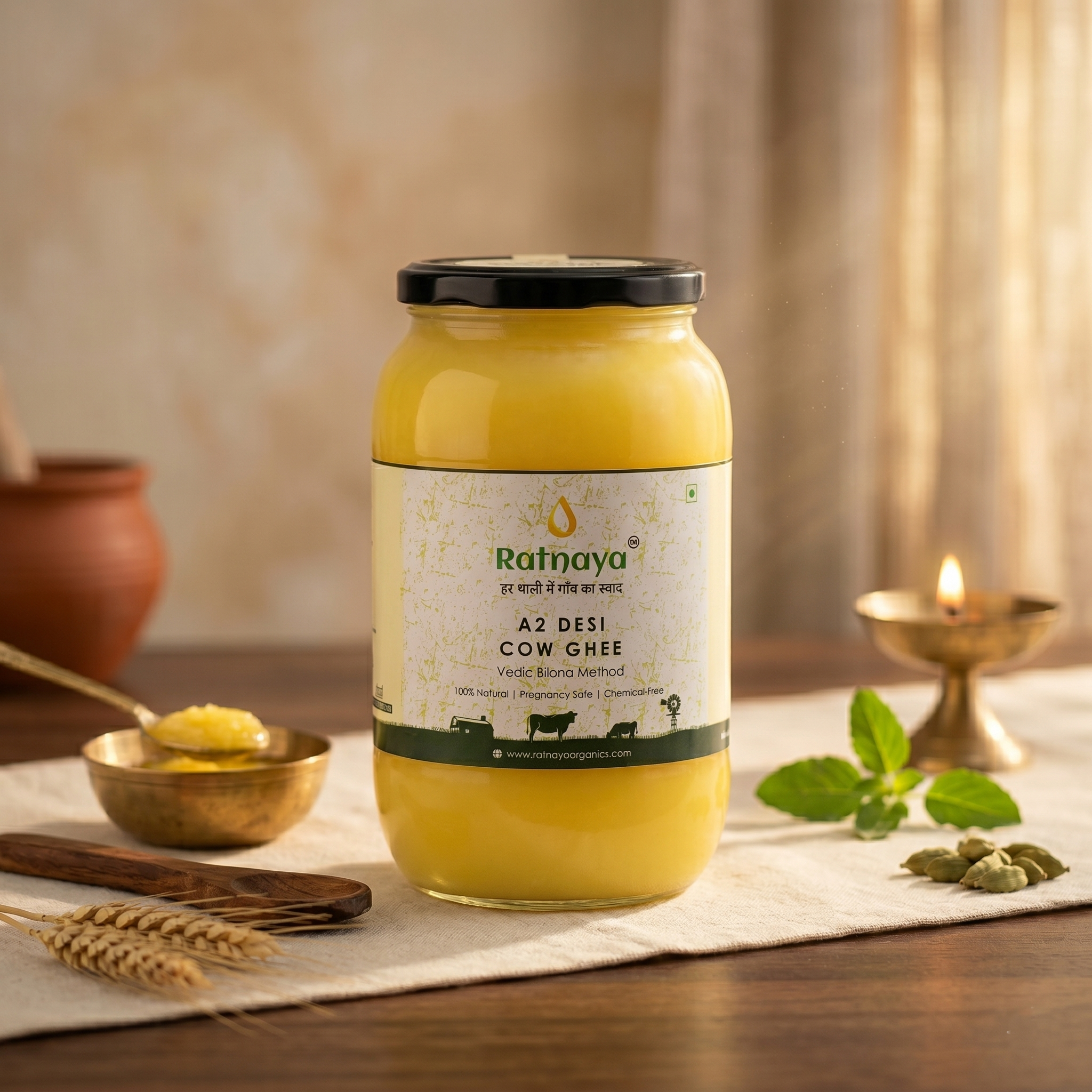
At Ratnaya Organics, we price our A2 Rathi cow bilona ghee at ₹1,900 per kilogram (₹950 for 500g). This reflects:
• Fair wages for the people who help with milking and churning
• Quality feed for our cows (we don’t cut corners here)
• Proper testing and certifications
• Food-grade packaging
• Honest labeling
• A modest margin that keeps our farm viable
Could we charge more? Probably, if we invested heavily in branding and marketing. But I prefer keeping prices accessible while maintaining quality. Could we charge less? Not without compromising somewhere, and I won’t do that.
Questions to Ask Any Seller
Before buying A2 ghee at any price point, ask these questions:
1. What breed of cow produces your milk?
2. How many liters of milk do you use per kilogram of ghee?
3. Can you explain your production process step by step?
4. Do you have FSSAI license and lab testing reports?
5. What’s the fat percentage and moisture content of your ghee?
6. How do you ensure no adulteration?
7. What’s your refund policy if I’m not satisfied?
Legitimate sellers will answer confidently. Vague or defensive responses are red flags.
The Bottom Line
Authentic A2 ghee from indigenous cows made using the traditional bilona method has a real production cost that creates a natural price floor of around ₹1,600-1,800 per kilogram. Fair retail prices range from ₹1,800-2,500 depending on various factors I’ve explained.
Anything significantly below this range is almost certainly compromised in some way - either not truly A2, not bilona method, adulterated, or from crossbred rather than indigenous cows. Anything significantly above is usually premium branding rather than premium quality.
The best approach? Find a transparent producer whose process you understand, whose prices align with realistic production economics, and whose ghee your family enjoys. Then stick with them.
For us at Ratnaya Organics, fair pricing means customers can afford regular consumption of real A2 ghee without breaking the bank, while we can continue running our farm sustainably. It’s that simple.
If you have questions about ghee pricing or want to know more about our production process, reach out on WhatsApp at +91-9001924784 or follow us on Instagram at @ratnaya_organics. I’m always happy to talk ghee!
Frequently Asked Questions About A2 Ghee Pricing
Why is A2 ghee more expensive than regular ghee?
A2 ghee costs more because indigenous cows like Gir, Sahiwal, or Rathi produce significantly less milk (6-12 liters/day) compared to crossbred cows (20-25 liters/day), yet require similar care and feeding costs. Additionally, the bilona method is labor-intensive, taking nearly two days and requiring 25-30 liters of milk to produce just one kilogram of ghee. When you factor in the cost of maintaining indigenous breeds, traditional processing methods, and quality standards, the higher price reflects the genuine cost of production rather than just premium positioning.
Is organic A2 ghee worth the extra cost?
Organic certification typically adds ₹200-400 per kilogram to the price, covering costs of organic feed, restricted veterinary treatments, detailed record-keeping, and annual audits. Whether it’s worth it depends on your priorities. If you’re buying from a trusted local farmer who uses natural methods, the organic certificate might be redundant. However, if buying from unknown online sellers, organic certification from recognized bodies like India Organic provides assurance. The bilona method with grass-fed cows essentially produces naturally organic ghee even without formal certification.
How can I tell if cheap A2 ghee is authentic?
If A2 ghee is priced below ₹1,600 per kilogram, it’s highly unlikely to be authentic bilona ghee from indigenous cows. Verify authenticity by checking for: specific cow breed mentioned (not just “A2 cow”), detailed production process explanation, FSSAI license, lab testing reports, and transparent sourcing information. Simple home tests include refrigerating the ghee (should solidify with grainy texture and develop crystals), heating a spoonful (pure ghee melts evenly without residue), and checking aroma (authentic bilona ghee has a distinct, rich smell unlike commercial ghee). When prices seem too good to be true, they usually are.
What’s the difference between bilona and commercial ghee pricing?
Commercial ghee made from cream using industrial methods costs significantly less to produce - often ₹800-1,200 per kilogram retail. The bilona method requires milk to be converted to curd overnight, hand-churned with a wooden bilona, then slow-cooked, taking nearly two days and intensive labor. Commercial production uses machines to separate cream and churn butter in hours with minimal labor. While commercial ghee is faster and cheaper, bilona ghee retains more nutrients, has better digestibility, and maintains traditional flavor and texture. The price difference of ₹600-1,000 per kilogram directly reflects the additional time, labor, and milk quantity required for traditional production.
Do ghee prices vary by season?
Yes, milk production in India follows seasonal patterns with peak production in winter months (November-February) when cows produce 15-20% more milk in cooler weather. Summer months (April-June) see production drops, which can increase milk costs and consequently ghee prices. However, most established sellers maintain consistent pricing by producing larger batches during peak season and storing ghee properly for year-round supply. Some direct-to-consumer farmers offer better deals on ghee made during winter months. This seasonal variation affects production costs rather than quality.
Is branded ghee better than local producer ghee?
Not necessarily. Large brands have advantages like consistent supply, standardized processes, and extensive quality control, but they also carry high overhead costs for marketing, distribution, and branding that get added to the price. Local producers often offer equal or better quality at lower prices because they have minimal overhead and sell directly to consumers. The key is transparency - whether branded or local, look for clear information about cow breed, production method, testing reports, and FSSAI licensing. Many excellent local producers now match or exceed brand quality standards while offering better value and personal connection to your food source.
I’m Arvind, founder of Ratnaya Organics in Rajasthan. After years in engineering, I returned to my roots to start a farm focused on indigenous Rathi cows and traditional A2 ghee production. Every day, I’m hands-on with our cows, the bilona process, and direct customer interactions. My goal is to make authentic A2 ghee accessible while supporting sustainable indigenous cattle farming.
Connect with us: -
Website: ratnayaorganics.com
WhatsApp: +91-9001924784 -
Instagram: @ratnaya_organics


3 comments
Arisha53oi
Hello .
Hello. A 53 nice site 1 that I found on the Internet.
Check out this site. There’s a great article there. https://apkarc.com/best-iphone-apps-that-arent-on-android/|
There is sure to be a lot of useful and interesting information for you here.
You’ll find everything you need and more. Feel free to follow the link below.
Arisha51oi
Hello colleagues
Good evening. A 51 great site 1 that I found on the Internet.
Check out this site. There’s a great article there. https://skylanc.com/online-casinos/the-most-ridiculous-casino-myths-players-still-believe/|
There is sure to be a lot of useful and interesting information for you here.
You’ll find everything you need and more. Feel free to follow the link below.
Anya173oi
Hello .!
I came across a 173 fantastic site that I think you should check out.
This resource is packed with a lot of useful information that you might find helpful.
It has everything you could possibly need, so be sure to give it a visit!
[url=https://smallblog.org/tips-on-how-to-work-and-study-at-the-same-time/]https://smallblog.org/tips-on-how-to-work-and-study-at-the-same-time/[/url]
And don’t overlook, folks, — a person always can inside the article find responses to address your the very complicated questions. The authors tried — explain the complete data via an very accessible method.