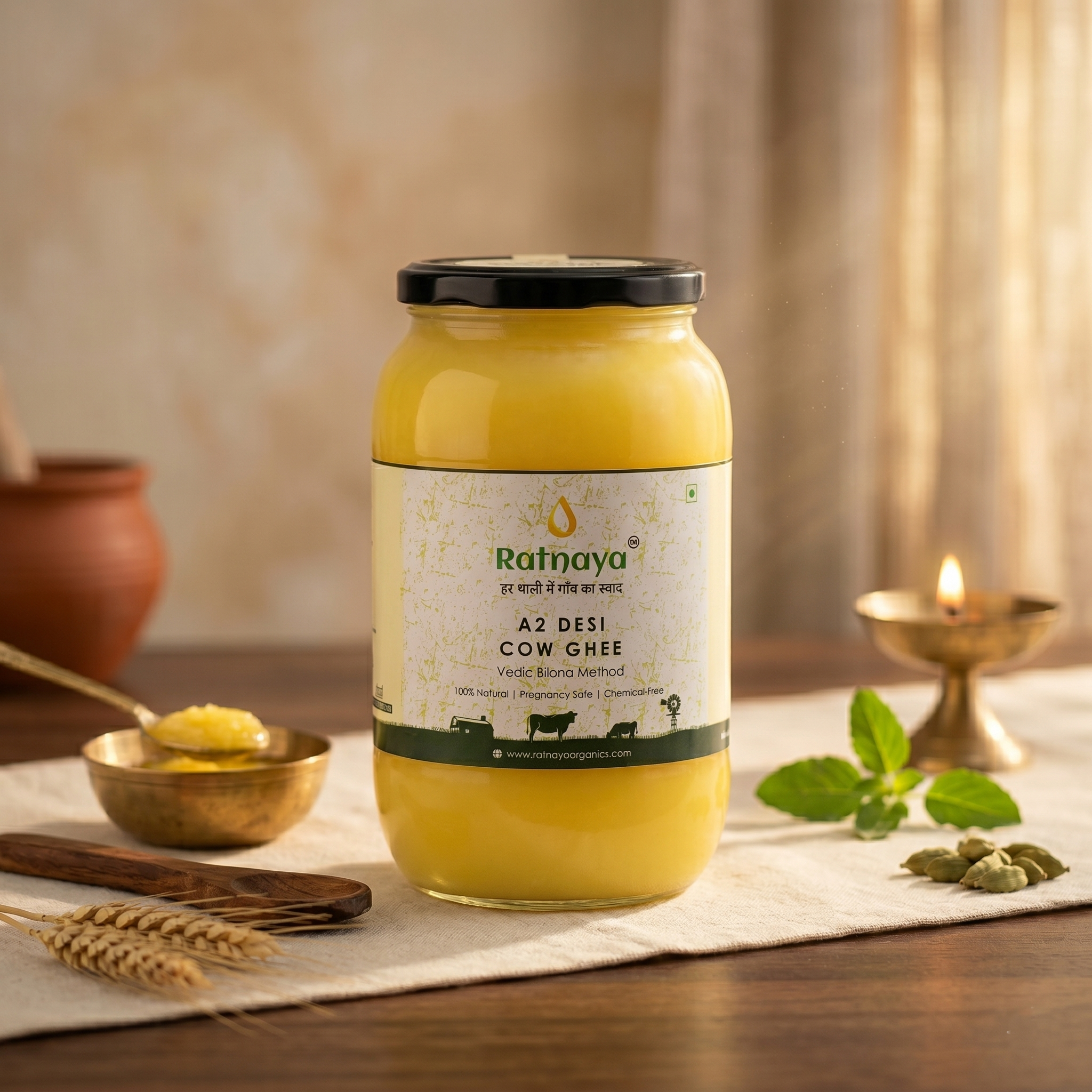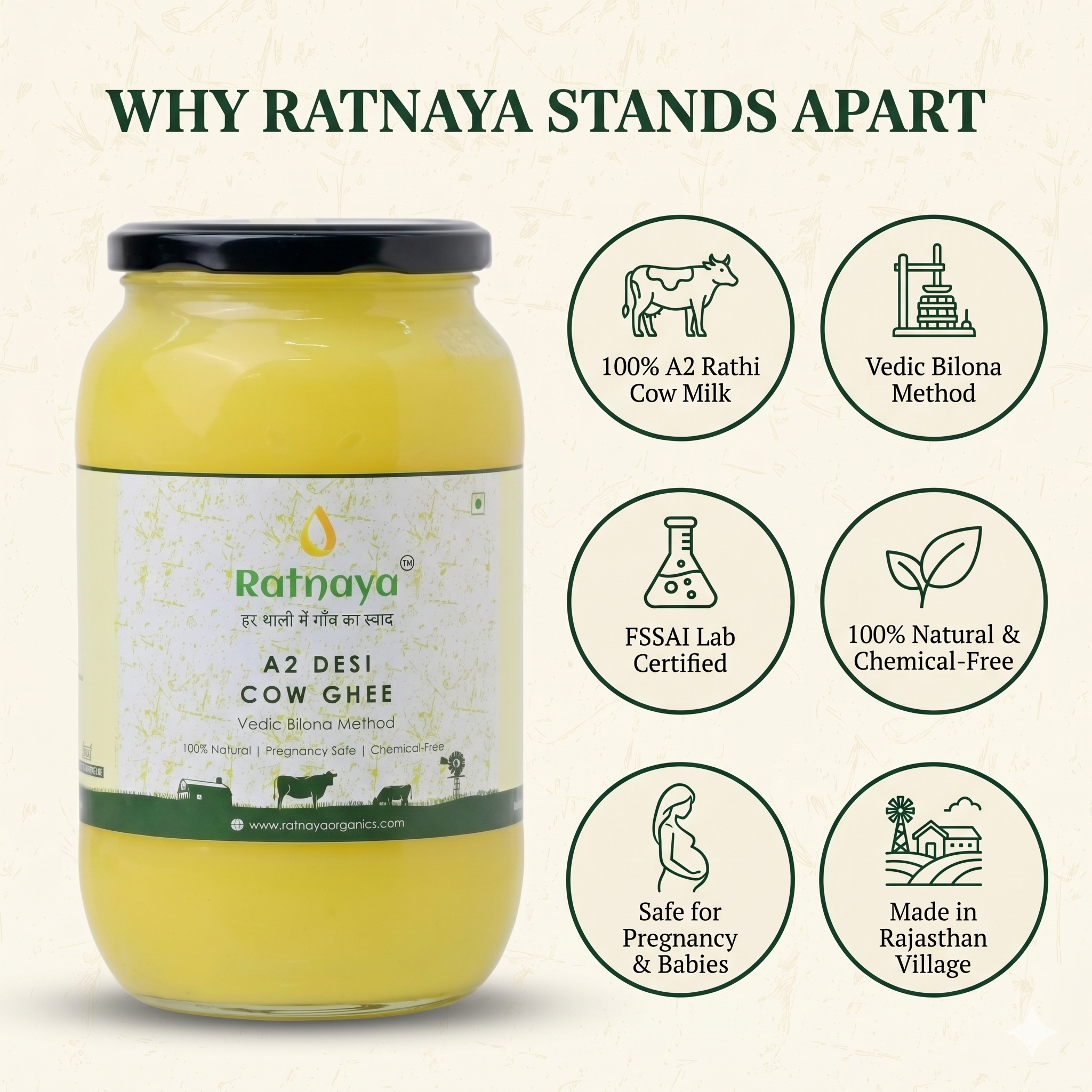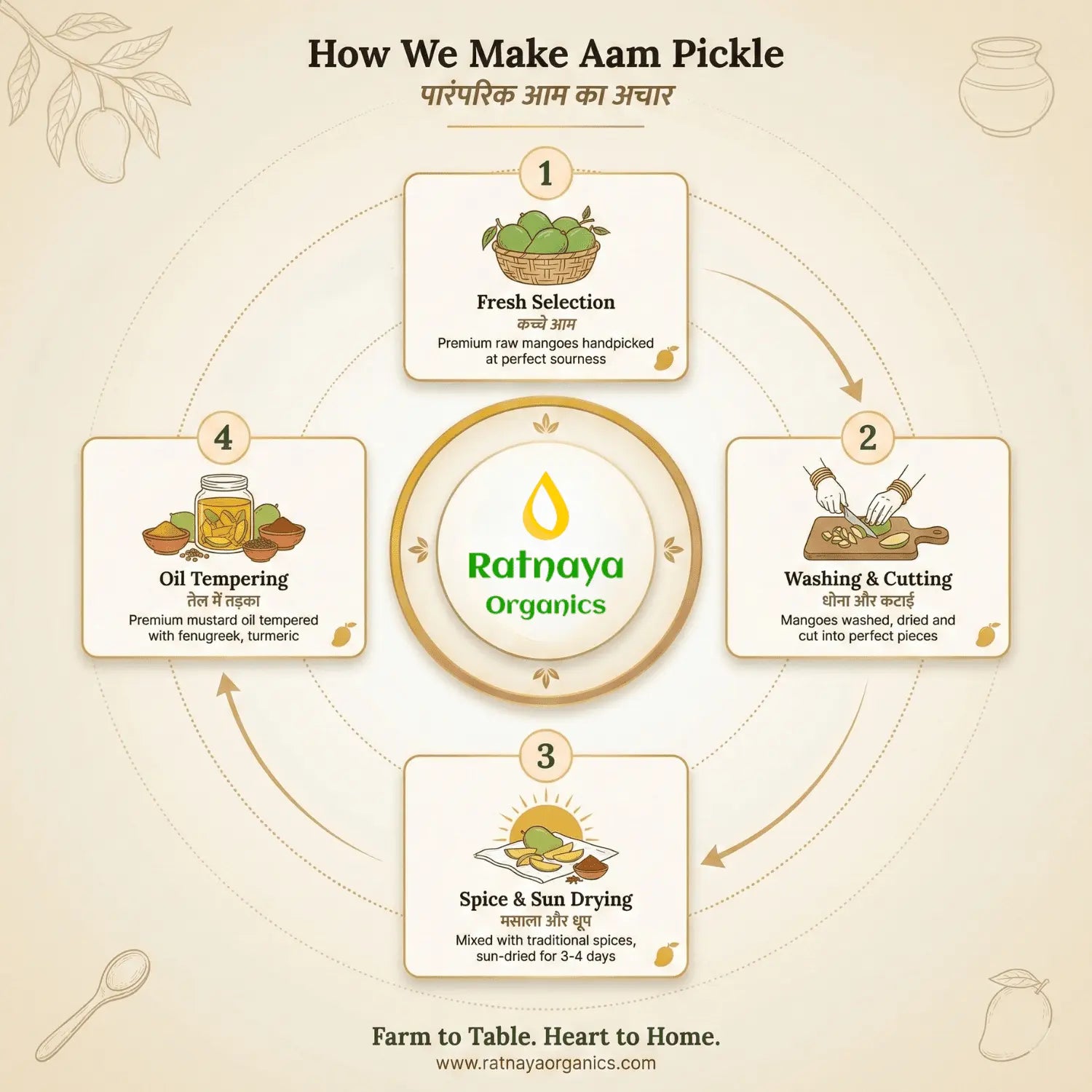

TL;DR - Quick Verdict for Busy Buyers:
Organic cow ghee costs ₹200-400 more per kg than regular A2 ghee, but certification doesn’t guarantee grass-fed. Key checks: NPOP/India Organic certification (₹10,000-25,000 annual cost for farmers justifies premium), verify grass-fed claims separately (ask about pasture percentage), understand that organic certified can still be grain-fed. Fair pricing: ₹2,000-2,800/kg for organic grass-fed. Best value: Direct-from-farm organic producers with transparent practices. If you’re price-sensitive but health-conscious: Regular A2 from grass-fed indigenous cows (even without organic cert) often beats certified organic grain-fed ghee nutritionally.
👥 Who This Guide is For:
• If you’re researching organic options → This entire guide walks you through certifications and reality
• If you’re ready to buy organic ghee → Skip to “Questions to Ask” section
• If you’re deciding organic vs regular A2 → Read “Premium Pricing Justification” first
• If you’re confused by labels → Check the “Certification Requirements” section
Two months ago, a customer called me frustrated. She’d bought “organic cow ghee” at ₹2,600 per kilogram, believing it was the healthiest option for her family. But when I asked about the cows’ diet, she realized the seller never mentioned grass-feeding. The ghee was organically certified, yes - but the cows ate organic grain concentrate. She’d paid premium pricing for organic certification but missed the bigger nutritional benefit: grass-feeding.
I’m Arvind from Ratnaya Organics in Rajasthan. Today, I want to clear up the massive confusion around organic ghee - what certifications actually mean, why grass-fed matters more than most organic labels suggest, and how to evaluate genuine organic claims in India’s chaotic ghee market.
Understanding Organic Ghee: What It Actually Means
Let’s start with definitions, because the term “organic cow ghee” gets thrown around loosely.
True Organic Ghee requires three components: 1. Cows raised on certified organic farms following NPOP standards 2. Cows fed certified organic feed (whether grass, grains, or mixed) 3. Milk processed and ghee made following organic handling protocols
Notice what’s NOT required? Grass-feeding. You can have 100% certified organic ghee from cows eating 80% organic grain concentrate. It’s still legally “organic” but nutritionally very different from grass-fed ghee.
The National Programme for Organic Production (NPOP) managed by APEDA sets India’s official organic standards, covering everything from soil management to livestock feed requirements. NPOP certification prohibits synthetic fertilizers, chemical pesticides, GMOs, synthetic hormones, and antibiotics. These are important standards - but they don’t mandate grass-based feeding.
Here’s what NPOP actually requires for organic dairy: - Organic feed (grass, hay, silage, or organic grains) - No synthetic growth hormones - No routine antibiotic use - Minimum outdoor access requirements - No GMO feed - Annual inspection and renewal
What NPOP doesn’t specify: The ratio of grass to grain in cow’s diet. This is the critical gap most buyers miss.
The Grass-Fed vs Grain-Fed Nutritional Reality
This is where organic certification alone doesn’t tell the full story. The cow’s diet - grass versus grain - has a dramatic impact on ghee’s nutritional profile, regardless of organic certification.
The Science Behind Grass-Fed Superiority
Research published in Food Science and Nutrition analyzing over 1,100 milk samples found striking differences:
Omega-3 Fatty Acids: - Grass-fed (100% forage): 0.05 grams per 100g milk - Conventional grain-fed: 0.02 grams per 100g milk - 147% increase in omega-3s from grass-feeding
Omega-6 to Omega-3 Ratio: - Grass-fed milk: Nearly 1:1 (ideal for human health) - Conventional milk: 5.7:1 (pro-inflammatory) - Organic grain-fed: ~2.5:1 (better but not optimal)
Conjugated Linoleic Acid (CLA): - Grass-fed: 125% more CLA than conventional - CLA supports metabolism, reduces abdominal fat, strengthens immunity
Additional research from University of Minnesota Extension found that grass-fed dairy had 52% less omega-6 than conventional milk and contained higher levels of fat-soluble vitamins A, D, E, and K.
Here on our farm with Rathi cows, I see this difference firsthand. During monsoon when our cows graze on lush green pastures, the ghee is deep golden-yellow with intense aroma. In peak summer when they eat more stored hay, the color lightens slightly. This natural variation reflects the nutritional changes researchers document in studies.
Comparison: Grass-Fed vs Grain-Fed Cow Ghee
|
Nutritional Factor |
Grass-Fed (100% Forage) |
Mixed (80% Forage, 20% Grain) |
Grain-Heavy (50% Grain) |
|
Omega-3 Content |
High (0.05g/100g milk) |
Medium (0.03-0.04g/100g) |
Low (0.02g/100g) |
|
Omega-6:Omega-3 Ratio |
1:1 (Ideal) |
2-3:1 (Good) |
5-6:1 (Poor) |
|
CLA Levels |
Very High |
Medium-High |
Low-Medium |
|
Beta-Carotene |
High (deep yellow color) |
Medium |
Low (pale color) |
|
Vitamin E |
50% higher than grain-fed |
25% higher |
Baseline |
|
Production Cost |
High (lower milk yield) |
Medium |
Low (higher yield) |
|
Typical Price/kg |
₹2,400-2,800 |
₹2,000-2,400 |
₹1,800-2,000 |
Key Takeaway: An organic certified cow fed 50% organic grain produces nutritionally inferior ghee compared to a non-certified indigenous cow grazing on natural pastures.
Organic Certification Requirements in India
Understanding certification helps you evaluate seller claims and justify pricing premiums.
NPOP Certification Process
The NPOP certification process involves multiple steps that farmers must follow annually:
Initial Certification (Year 1): 1. Choose accredited certification body (INDOCERT, ECOCERT, OneCert, etc.) 2. Submit detailed farm plan including crop/livestock management 3. Document all inputs used (feed, medicines, fertilizers) 4. Physical farm inspection by certification officer 5. Buffer zone verification (if near conventional farms) 6. Record-keeping system audit 7. Certification decision and scope certificate issuance
Annual Renewal Requirements: - Fresh inspection every year - Updated documentation - Continued compliance monitoring - Traceability maintenance through transaction certificates
Cost Breakdown: - Small farms (under 5 acres): ₹10,000-15,000 annually - Medium farms (5-15 acres): ₹15,000-25,000 annually - Group certification (FPO): ₹5,000-8,000 per farmer - Additional costs: Inspection fees, testing charges, renewal fees
These costs are real and significant for small farmers, which partly justifies the premium pricing of genuine organic products.
What Organic Certification Verifies
Certified Components: ✅ No synthetic pesticides or fertilizers on feed crops ✅ No GMO feed ingredients ✅ No synthetic growth hormones (oxytocin, BST) ✅ No routine prophylactic antibiotics ✅ Organic feed sourcing and documentation ✅ Minimum outdoor access periods ✅ Complete traceability from farm to consumer
What Certification Does NOT Verify: ❌ Percentage of grass vs grain in diet ❌ Quality of pasture land ❌ Actual grazing time (beyond minimum) ❌ Indigenous vs crossbred cow breeds ❌ Traditional vs industrial processing methods ❌ Milk yield per cow (indicator of feeding intensity)
This is crucial to understand. Organic certification provides a baseline of farming practices but doesn’t guarantee the nutritional superiority that comes specifically from grass-feeding.
India Organic vs Other Certifications
India Organic (NPOP): - Managed by APEDA under Ministry of Commerce - Recognized by EU and Switzerland for unprocessed products - Uses “India Organic” or unified “Unified India Organic” logo (post-2024) - Valid for both domestic and export markets
PGS-India (Participatory Guarantee System): - Community-based certification for small farmers - Lower cost but not recognized by EU - Valid only for domestic Indian market - Peer review instead of third-party inspection
Private Certifications: - USDA Organic (for US exports) - EU Organic (for European exports) - May have stricter pasture requirements than NPOP
When buying organic cow ghee, look for NPOP certification at minimum. PGS is acceptable if buying from known local farmers, but be aware of export limitations.
Why Organic Ghee Costs More: Premium Pricing Justification
Let me break down why authentic organic cow ghee costs ₹200-400 more per kilogram than quality non-certified A2 ghee.
Cost Comparison: Organic vs Conventional Farming
|
Cost Factor |
Organic Farm |
Conventional Farm |
Difference |
|
Feed (per cow annually) |
₹25,000-30,000 |
₹20,000-22,000 |
+20-35% |
|
Certification |
₹15,000-25,000 |
₹0 |
N/A |
|
Organic inputs |
₹8,000-12,000 |
₹5,000-6,000 |
+60-100% |
|
Labor (documentation) |
₹15,000-20,000 |
₹8,000-10,000 |
+87-100% |
|
Veterinary (limited options) |
₹6,000-8,000 |
₹4,000-5,000 |
+50-60% |
|
Total Annual Cost |
₹69,000-95,000 |
₹37,000-43,000 |
+86-121% |
These numbers are from our farm’s actual records and match data I’ve seen from other organic dairy farms in Rajasthan.
Milk Yield Reality
Here’s the uncomfortable truth about organic dairy economics:
Conventional/Grain-Heavy Feeding: - Milk yield: 15-20 liters/day from indigenous cows - Annual production: 3,000-4,000 liters - Cost per liter: ₹12-14
Organic Grass-Fed: - Milk yield: 8-12 liters/day from same breed - Annual production: 1,800-2,500 liters - Cost per liter: ₹27-38
The lower yield from grass-feeding is natural and healthy - cows aren’t pushed to produce beyond their biological capacity. But it directly impacts production costs.
When you factor this into ghee: - 30 liters milk → 1 kg ghee - Organic grass-fed: ₹810-1,140 just for milk - Add processing, certification, packaging, margin - Fair retail price: ₹2,000-2,800/kg
Compare to conventional A2 ghee: - Same 30 liters milk → ₹360-420 - Processing, packaging, margin - Retail price: ₹1,800-2,200/kg
The ₹200-600 premium for organic grass-fed ghee is mathematically justified by real production economics.
When Organic Premium is NOT Justified
However, not all “organic” pricing is fair:
Red Flags for Overpricing: - Organic certified but grain-heavy feed (shouldn’t cost much more than non-organic) - Organic ghee above ₹3,200/kg (excessive branding premium) - “Organic” claims without certification (fraud) - Organic from crossbred cows at indigenous cow prices
Fair Pricing Guidelines: - Organic grass-fed (indigenous cows): ₹2,000-2,800/kg - Organic grain-fed: ₹1,900-2,400/kg (shouldn’t command huge premium) - Non-certified grass-fed (indigenous): ₹1,800-2,200/kg - Regular A2 (indigenous, mixed diet): ₹1,800-2,100/kg
Questions to Ask Before Buying Organic Ghee
Here’s my recommended verification checklist for evaluating any organic cow ghee seller:
Certification Verification
1. Can you show your NPOP certification?
– Look for certificate number
– Verify on APEDA website (apeda.gov.in)
– Check validity dates (annual renewal)
– Confirm scope includes dairy/livestock
2. Which certification body certified you?
– INDOCERT, ECOCERT, OneCert, Control Union are reputable
– Unknown certification bodies are red flags
– Private “certifications” don’t count
3. When was your last inspection?
– Should be within past 12 months
– Can they share inspection reports?
– Is documentation current?
Feeding Practices
4. What percentage of your cows’ diet is grass/forage?
– Look for 80%+ for meaningful grass-fed benefits
– 100% is ideal but rare year-round
– Below 60% is essentially grain-fed
5. Do cows graze on pasture daily? For how many hours?
– Minimum 6-8 hours during grazing season
– 150+ days grazing season minimum
– Winter feeding plan with preserved forage
6. What do you feed when pasture isn’t available?
– Organic hay, silage, dried forages expected
– Some organic grains acceptable in small amounts
– “Organic feed mix” is vague - ask for specifics
Breed and Production
7. What breed of cows do you have?
– Indigenous breeds (Gir, Sahiwal, Rathi) expected
– Crossbred cows hint at production-focused rather than quality-focused
– Can they name individual cows’ breeds?
8. What’s your average milk yield per cow?
– Indigenous grass-fed: 8-12 liters/day is normal
– Above 15 liters suggests grain supplementation
– Above 20 liters means definitely not primarily grass-fed
Processing and Sourcing
9. Do you own the cows or source milk?
– Own-farm control is ideal for organic verification
– If sourcing: How do they verify farmers’ organic compliance?
– Group certification through FPO is acceptable
10. What’s your ghee-making process?
– Bilona method preferred (preserves nutrients)
– Organic handling certification separate from organic production
– Processing facility should also be certified
Transparency and Testing
11. Can you provide recent lab testing reports?
– Should show fatty acid profile (omega-3, omega-6 ratios)
– No pesticide residues
– No antibiotic residues
– Fat content, moisture content
12. Can I visit your farm or see operations?
– Legitimate organic farmers usually welcome visits
– Video calls acceptable if distance is an issue
– Refusal to show operations is a red flag
When I ask customers these questions about their current ghee suppliers, 8 out of 10 realize they don’t have good answers. Don’t be embarrassed if you’re in that group - these details are deliberately hidden by many sellers.
The Grass-Fed Question: Beyond Organic Certification
Here’s my controversial opinion based on both research and farming experience: For ghee nutrition, grass-feeding matters more than organic certification.
Let me explain with a comparison:
Option A: Certified Organic, Grain-Heavy - NPOP certified - 50% organic grain, 50% organic forage - Crossbred Holstein cow (high yield) - Omega-6:Omega-3 ratio: 4:1 - Price: ₹2,400/kg
Option B: Non-Certified, Grass-Fed - No certification (can’t afford ₹15,000 annual cost) - 90% grass/forage, 10% conventional grain supplement - Indigenous Rathi cow (low yield) - Omega-6:Omega-3 ratio: 1.5:1 - Price: ₹1,900/kg
From a pure nutrition standpoint, Option B provides better fatty acid profile, more CLA, higher fat-soluble vitamins - despite lacking certification. The cow’s diet determines nutrient content more than the certification label.
This doesn’t mean certifications are useless - they provide important assurances about pesticides, hormones, and antibiotics. But if you’re choosing between certified-organic-grain-fed and non-certified-grass-fed, consider prioritizing the latter for nutritional benefits.
Ideal Scenario: Certified Organic AND Grass-Fed
Of course, the best option combines both: - NPOP certified organic - 80-100% grass/forage based diet - Indigenous cow breed - Traditional processing
This is what we strive for at Ratnaya Organics, though our certification is still in process (year 2 of 3-year transition). We prioritize grass-feeding first, with certification following once economics allow.
Seasonal Variations in Organic Grass-Fed Ghee
One thing that distinguishes genuine organic grass-fed ghee from industrial products: seasonal variation. This is a feature, not a bug.
Monsoon/Winter Ghee (July-February): - Deep golden-yellow color (high beta-carotene) - Richer, more intense aroma - Slightly firmer texture - Higher omega-3 content from fresh grass - Peak production season
Summer Ghee (March-June): - Lighter golden color - Mellower aroma - Softer texture at room temperature - Slightly lower omega-3 (still higher than grain-fed) - Lower production volumes
If your “organic grass-fed” ghee looks identical year-round, question the grass-fed claim. Natural seasonal variation reflects genuine grass-based feeding.
Making the Right Choice: Organic vs Regular A2 Ghee
Here’s a decision framework I share with customers:
Choose Certified Organic Ghee When: - You have budget for premium pricing (₹2,000-2,800/kg) - Pesticide/chemical residue concerns are primary - You specifically avoid GMOs - Hormone and antibiotic use concerns you - You want supporting documentation for health needs - You trust the certification more than the individual farmer
Choose Quality Non-Certified A2 Ghee When: - Budget is constrained but quality matters - You can verify grass-feeding practices directly - You know and trust the farmer/producer - Certification costs push prices beyond your range - You prioritize fatty acid profile over certification label - Grass-fed indigenous cow ghee available without certification
Choose Budget Regular Ghee When: - Price is the primary constraint - Ghee is used in large quantities - Cooking/frying use where nutritional benefits are less critical
There’s no universally “correct” choice - it depends on your priorities, budget, and available options in your area.
Our Approach at Ratnaya Organics
Let me share what we do and why:
Current Status: - Year 2 of NPOP certification process (3-year transition required) - Already following all organic farming practices - 85% grass/forage based feeding year-round - 12 indigenous Rathi cows, all naturally A2 - Traditional bilona method processing
Why Transition Takes 3 Years: - Year 1: Land conversion begins, using organic methods - Year 2: Continued organic practices, documentation - Year 3: Final certification after proven compliance
Our Philosophy: We prioritized grass-feeding and traditional methods first, adding certification later. This reversed the typical approach (get certified, then optimize), but we believe nutritional quality shouldn’t wait for paperwork.
Pricing Honesty: Until we have full certification: - We price at ₹1,900/kg (non-certified grass-fed rate) - We transparently share our certification timeline - We provide informal documentation of our practices - We don’t charge organic premiums we haven’t earned
Once certified (expected 2026), we’ll adjust to ₹2,200/kg, justified by certification costs but kept accessible.
Red Flags in Organic Ghee Marketing
Watch for these warning signs:
Certification Red Flags: ❌ “Organic” without certification number ❌ Certificate not verifiable on APEDA website ❌ Certification older than 12 months ❌ PGS certification claimed as equivalent to NPOP ❌ Private/unknown certification bodies
Feeding Claims Red Flags: ❌ “Grass-fed” but cows give 20+ liters daily ❌ Same color ghee year-round ❌ No details about pasture/grazing ❌ Vague answers about feed composition ❌ “Organic feed” without grass/grain ratio
Pricing Red Flags: ❌ Organic ghee under ₹1,800/kg (too cheap) ❌ Organic ghee over ₹3,200/kg (overpriced) ❌ Huge discounts (40-50% off) on organic products ❌ Identical pricing for organic and non-organic options
Transparency Red Flags: ❌ Won’t share certification documents ❌ Refuses farm visits or video calls ❌ No lab testing reports available ❌ Vague or defensive answers to direct questions ❌ Over-reliance on marketing jargon
Building Long-Term Relationships with Organic Producers
The best way to buy organic cow ghee is establishing direct relationships with producers. Here’s how:
1. Start Small: Buy 500g, verify quality, test at home
2. Ask Questions: Use the checklist above, gauge transparency
3. Visit if Possible: Nothing replaces seeing the farm yourself
4. Request Documentation: Certifications, lab reports, feeding records
5. Compare Options: Try 2-3 organic producers before committing
6. Build Trust: Long-term relationships often unlock better pricing
7. Provide Feedback: Help farmers understand what matters to you
At Ratnaya Organics, our repeat customers get: - Early access to fresh batches - Priority during low-production summer months - Occasional loyalty discounts - Transparent updates about farm operations - Direct communication with me
This relationship-based buying works for both parties - customers get quality assurance, farmers get stable demand and fair pricing.
Frequently Asked Questions About Organic Cow Ghee
Is organic certification worth the extra cost for ghee?
It depends on your priorities. Organic certification adds ₹200-400/kg due to real costs (₹15,000-25,000 annual certification, higher organic feed costs, additional labor for documentation). The certification provides verified assurance that no synthetic pesticides, GMOs, hormones, or routine antibiotics were used in production. However, certification alone doesn’t guarantee grass-feeding or nutritional superiority. If budget allows and chemical residue concerns are primary, organic certification is worthwhile. But if choosing between certified-organic-grain-fed versus non-certified-grass-fed indigenous cow ghee, the latter often provides better nutritional profile despite lacking certification. Ideal scenario combines both: organic certified AND grass-fed, but this represents premium pricing (₹2,400-2,800/kg).
How do I verify if organic cow ghee is genuinely grass-fed?
Grass-fed status isn’t guaranteed by organic certification alone, so verification requires additional checks. Ask sellers for specific feeding details: what percentage of diet is grass/forage (look for 80%+ for meaningful benefits), how many hours daily do cows graze (minimum 6-8 hours), and what supplemental feed is provided off-season. Request average milk yield per cow - indigenous grass-fed cows typically produce 8-12 liters/day; above 15 liters suggests significant grain supplementation. Look for seasonal color variation in ghee: deep golden in monsoon/winter (high beta-carotene from fresh grass), lighter in summer. Check if they can provide fatty acid analysis showing omega-6:omega-3 ratio near 1:1. Request farm visits or video calls to see pastures and grazing practices. If seller cannot answer these specifically or gets defensive, the grass-fed claim is questionable regardless of organic certification.
What’s the difference between NPOP and PGS organic certification?
NPOP (National Programme for Organic Production) is India’s official third-party organic certification managed by APEDA under the Ministry of Commerce, recognized by the EU and Switzerland for exports, and costs ₹10,000-25,000 annually for small farmers through accredited certification bodies like INDOCERT, ECOCERT, or OneCert. It involves annual farm inspections, detailed documentation, and complete traceability. PGS-India (Participatory Guarantee System) is a community-based certification with peer review instead of third-party inspection, costing significantly less (₹5,000-8,000) and designed for small farmers selling domestically. However, PGS is not recognized by the EU, limiting export opportunities. For ghee buyers, NPOP provides stronger documentation and third-party verification, making it more reliable for unknown sellers. PGS is acceptable when buying from known local farmers where you can verify practices directly, but be aware it’s valid only in the Indian domestic market.
Can organic grain-fed ghee be less healthy than non-organic grass-fed ghee?
Yes, from a nutritional composition standpoint. Research shows grass-feeding has more impact on fatty acid profile than organic certification alone. Organic grain-fed ghee from cows eating 50% organic corn/soy has omega-6:omega-3 ratio around 4:1, while non-organic grass-fed ghee from pasture-raised indigenous cows achieves nearly 1:1 ratio - significantly better for cardiovascular health. Grass-fed ghee contains 147% more omega-3 fatty acids, 125% more CLA (conjugated linoleic acid), 50% more vitamin E, and higher beta-carotene regardless of organic certification. Organic certification provides assurance about pesticides, GMOs, hormones, and antibiotics - important but different benefits. If forced to choose due to budget constraints, prioritize grass-fed feeding over organic label for superior nutritional profile. Ideal solution combines both benefits, but grass-feeding determines nutrient content more than certification status alone.
Why does organic grass-fed ghee cost almost double regular A2 ghee?
The price difference (₹2,000-2,800 for organic grass-fed vs ₹1,800-2,200 for regular A2) reflects real production economics. Organic certification costs ₹15,000-25,000 annually for small farms. Organic feed costs 20-35% more than conventional. Most significantly, grass-fed indigenous cows produce 8-12 liters/day versus 15-20 liters when grain-supplemented - nearly 50% lower yield. Combined with 30 liters milk needed per kg ghee, milk cost alone jumps from ₹360-420 to ₹810-1,140 for organic grass-fed. Additional factors include higher labor for documentation, limited organic veterinary options, and lower economies of scale due to smaller production volumes. The premium isn’t marketing fluff - it’s mathematical reality of lower-yield, higher-cost production. However, pricing above ₹2,800/kg often represents branding premium beyond actual production costs. Fair organic grass-fed pricing is ₹2,000-2,800/kg from direct producers.
What should I look for on organic ghee labels and certifications?
Look for India Organic logo or Unified India Organic logo (post-2024 FSSAI standard) prominently displayed on packaging. Check for NPOP certification number (format: NPOP/NAB-[certification body]-[number]) that you can verify on APEDA’s website (apeda.gov.in). The label should name the certification body (INDOCERT, ECOCERT, OneCert, etc.) and show certification validity dates - organic certification requires annual renewal. For grass-fed claims beyond organic certification, look for specific feeding details: “100% grass-fed,” “pasture-raised,” or “forage-based diet” with percentage specified. Ingredient list should show only “organic cow milk” or “organic cow butter” - nothing else. Labels should include FSSAI license number, complete manufacturer address, batch number for traceability, and nutritional information. Be suspicious of vague terms like “natural,” “chemical-free,” or “pure” without certification numbers, or claims like “certified organic” without showing which certification body verified this. Request supporting documentation if purchasing significant quantities.
About the Author
I’m Arvind, founder of Ratnaya Organics in Rajasthan. After years in engineering, I returned to my roots to start a farm focused on indigenous Rathi cows and traditional A2 ghee production. We’re currently in year 2 of NPOP organic certification while already practicing organic farming and prioritizing grass-based feeding. Every day, I’m hands-on with our cows, the bilona process, and direct customer interactions. My goal is to make quality ghee accessible while educating consumers about the realities of organic certification versus grass-fed nutrition.
Connect with us: - Website: ratnayaorganics.com
WhatsApp: +91-9001924784
Instagram: @ratnaya_organics