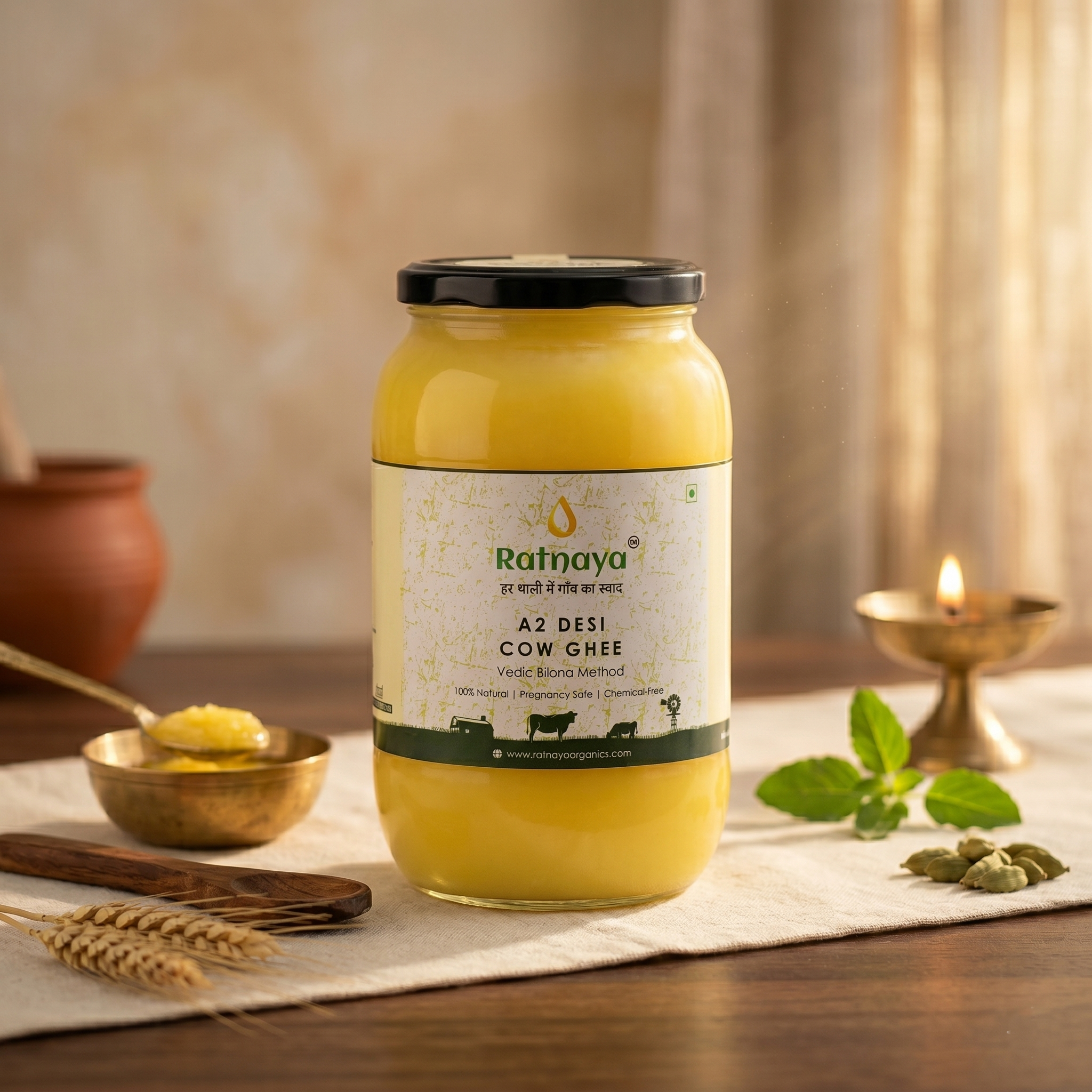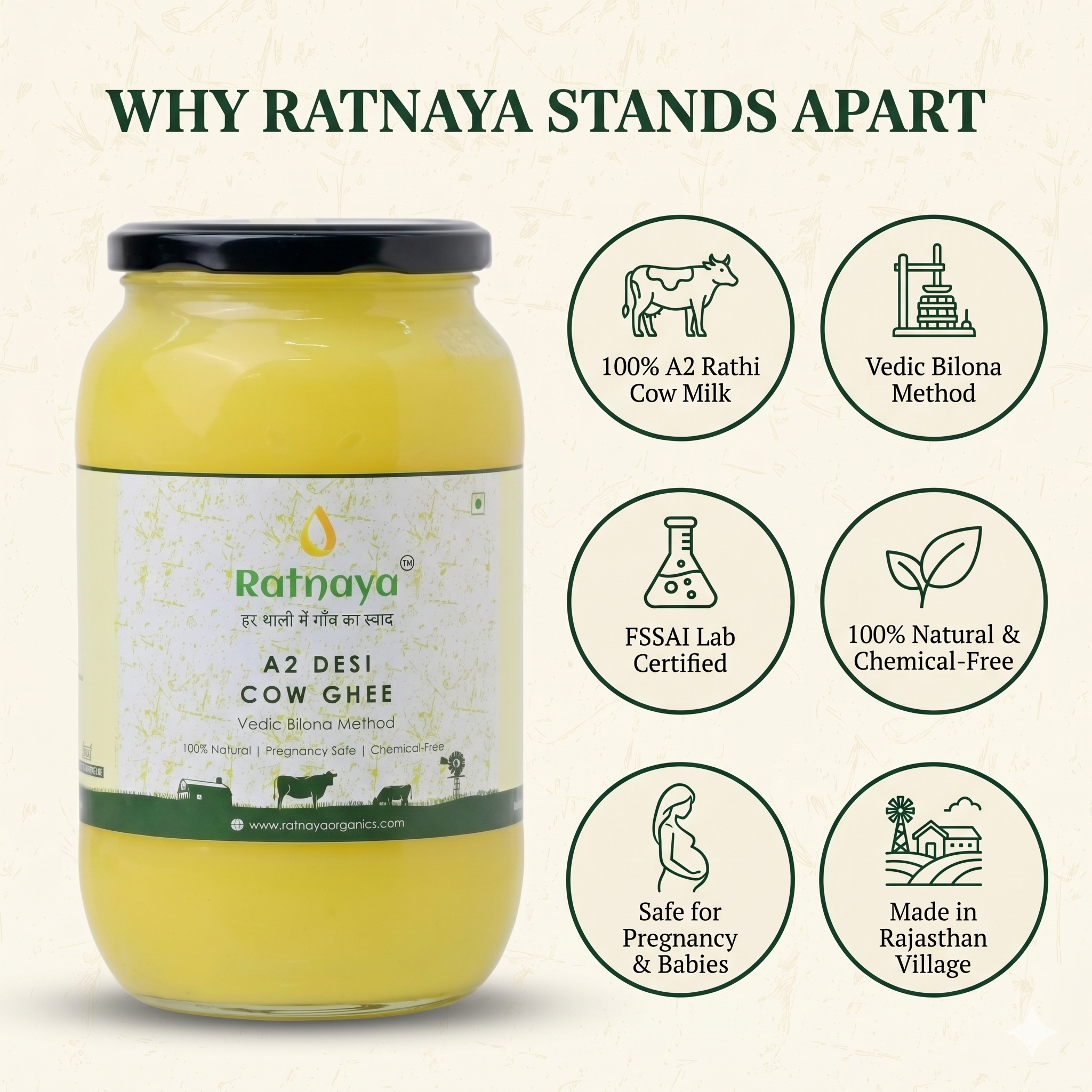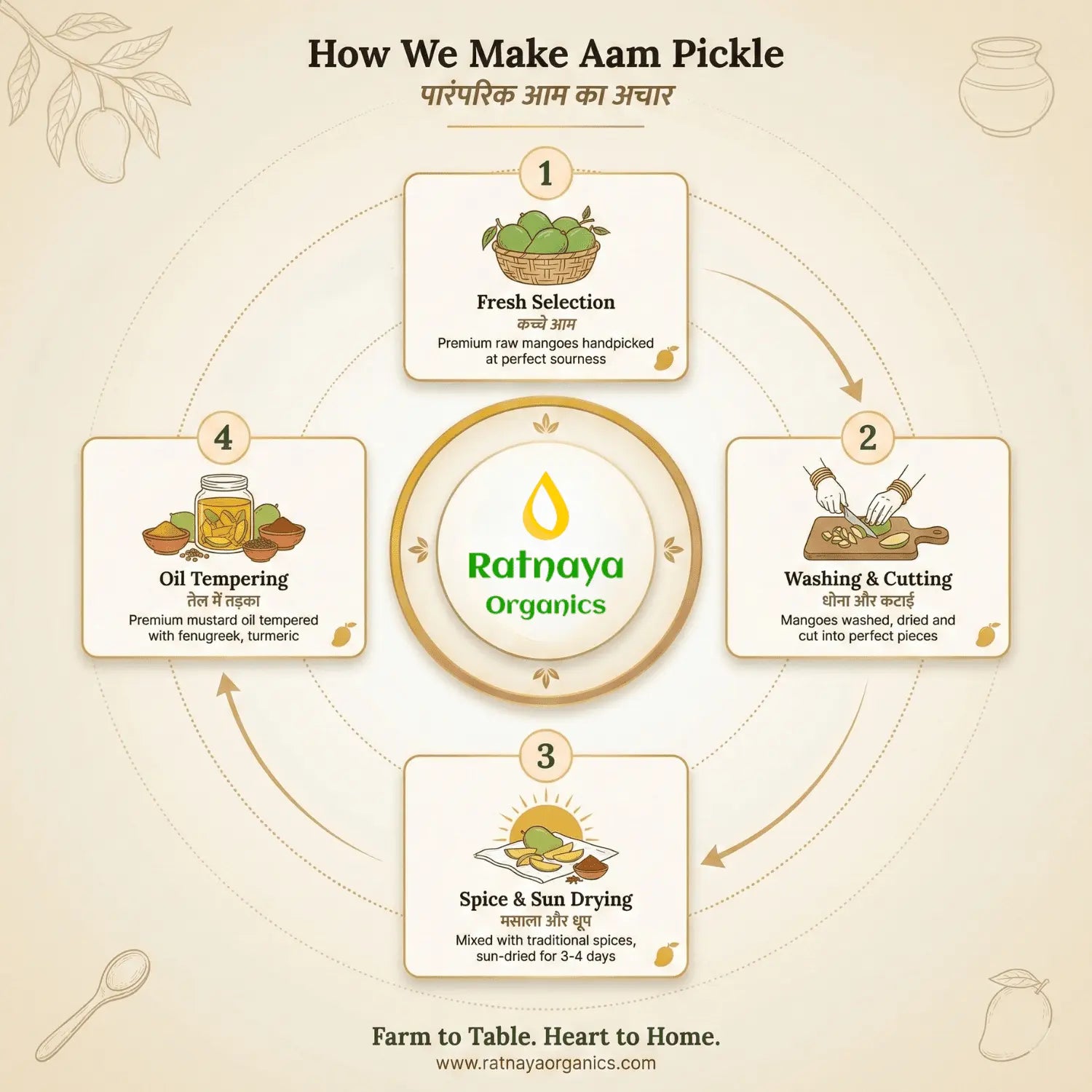

Namaste! I’m Arvind, and I run Ratnaya Organics here in Rajasthan where we produce traditional bilona A2 ghee from our Rathi cows. Over the years, I’ve spoken to hundreds of customers who feel confused and overwhelmed when trying to buy A2 ghee online. With so many brands making tall claims and the internet flooded with options, how do you know what’s real and what’s just smart marketing?
Let me share what I’ve learned both as a farmer producing A2 ghee and as someone who’s seen the industry from the inside. This guide will help you make informed decisions when you buy a2 ghee online without falling for fake products or overpaying for poor quality.
Why Buying A2 Ghee Online Needs Extra Caution
When you purchase ghee from a local dairy or directly from a farm, you can see the cows, smell the ghee, check its texture, and even ask questions face-to-face. Online shopping removes all these advantages. You’re buying based on photos, descriptions, and reviews that may or may not tell the complete story.
The A2 ghee market has exploded in recent years, and wherever there’s demand, there are people ready to cut corners. I’ve seen brands labeling regular ghee as “A2” without any certification, others mixing vegetable oils to increase profit margins, and some using machine-made ghee while claiming it’s hand-churned bilona. The convenience of buying a2 desi ghee online comes with the responsibility of being an informed buyer.
According to the Citizen Action Group’s detailed analysis on food safety in the era of online shopping, the rise of e-commerce platforms has necessitated stronger regulatory oversight to protect consumers from misleading claims and adulterated products. The report highlights how e-commerce platforms are now required to ensure proper labeling and certification display before products are sold online. When purchasing food items online, especially traditional products like A2 ghee, understanding what to verify becomes crucial for your family’s health and your wallet.
Understanding What Makes A2 Ghee Different
Before we dive into how to buy authentic a2 ghee, let’s understand what sets it apart. A2 ghee comes from cows that produce only A2 beta-casein protein in their milk. Indigenous Indian breeds like Gir, Sahiwal, and Rathi naturally produce this A2 protein, unlike hybrid or foreign breeds that produce A1 protein.
Research published in the National Library of Medicine’s comprehensive review on A2 milk consumption shows that A2 milk proteins are easier to digest than A1 proteins, causing fewer digestive issues in many people who struggle with regular dairy. The study explains how A1 beta-casein can release beta-casomorphin-7 (BCM-7) during digestion, which may cause inflammation and discomfort in sensitive individuals. This is why organic a2 cow ghee has become so popular among health-conscious consumers.
The difference isn’t just in the cow breed though. How the ghee is made matters enormously. Traditional bilona method ghee involves hand-churning curd made from A2 milk, which preserves nutrients and creates that distinct granular texture and nutty aroma that machine-made ghee simply can’t match.
Red Flags When Shopping for A2 Ghee Online
After years in this business, I’ve identified some major warning signs that should make you think twice before adding that ghee to your cart:
Unrealistically Low Prices: If you’re seeing A2 ghee selling for prices comparable to regular commercial ghee, something’s wrong. Authentic a2 cow ghee requires indigenous cows, quality feed, traditional production methods, and time. All of this costs money. When someone undercuts the market significantly, they’re either lying about what’s in the jar or cutting serious corners.
No Clear Sourcing Information: Legitimate brands will tell you exactly where their milk comes from, what breed of cows they use, and how they make the ghee. If the website is vague about sourcing or uses generic stock photos of cows instead of actual farm pictures, be suspicious.
Missing Certifications: Any brand claiming to sell pure A2 ghee should have FSSAI registration at minimum. According to the Food Safety and Standards Authority of India regulations, all food businesses must display their license number. Better brands will also have organic certification if they claim organic status, and ideally third-party A2 testing reports.
Too Good to Be True Claims: I see websites claiming their ghee cures diabetes, melts belly fat overnight, or solves every health problem known to humanity. Real A2 ghee has genuine health benefits, but it’s not a magic cure-all. Brands making extreme medical claims are usually compensating for poor product quality with aggressive marketing.
No Contact Information or Customer Service: Reputable sellers provide phone numbers, email addresses, and responsive customer service. If you can’t easily reach someone to ask questions about their product, that’s a massive red flag.
Essential Checks Before You Buy A2 Ghee Online
When I’m looking at any A2 ghee brand online, here’s my checklist:
Check the FSSAI License Number: Every legitimate food business selling online must display their FSSAI license number. You can verify this license on the FSSAI website to confirm the seller’s registration is active and genuine. According to a systematic review published in The Journal of Nutrition, while more research is needed, current evidence suggests A2 milk may offer digestive benefits over conventional milk, making proper sourcing verification even more important. This ensures the seller meets basic food safety and hygiene standards required by Indian food law.
Look for Cow Breed Specifications: The seller should clearly state which indigenous breed they use. Gir, Sahiwal, Rathi, Red Sindhi, and Tharparkar are the main A2 breeds in India. If they just say “desi cow” without specifying the breed, dig deeper with questions.
Production Method Details: How is the ghee made? Hand-churned bilona method or machine extraction? The bilona process takes longer and produces less ghee per liter of milk, but the quality and nutritional value are superior. If they don’t specify the method, assume it’s commercial production.
Third-Party Testing: Better brands provide lab test certificates proving their ghee is truly A2. These tests should be from recognized laboratories, not in-house “certifications” that mean nothing.
Transparent Pricing: Compare prices across 5-6 reputed brands. If everyone’s selling authentic A2 bilona ghee for ₹1,800-2,500 per kilogram but one brand offers it for ₹800, you know the cheaper one is compromised somehow.
Read Reviews Carefully: Don’t just look at star ratings. Read actual reviews, especially the negative ones. Look for specific comments about texture, smell, taste, and packaging. Fake reviews tend to be generic and overly positive without specific details.
Questions to Ask the Seller Before Purchasing
Don’t be shy about reaching out with questions. Any genuine seller will appreciate an informed buyer and answer happily. Here’s what I recommend asking:
About the Cows: What specific breed do you use? How many cows do you have? What do the cows eat? Are they grass-fed or grain-fed? Do you have pictures or videos of your actual cows?
About Production: Is it bilona method or commercial extraction? How much milk goes into making 1 kg of ghee? Can you show your production facility? Do you make ghee year-round or seasonally?
About Testing: Can you provide recent A2 testing certificates? Which lab did the testing? Can you share detailed nutritional analysis reports?
About Quality Assurance: What’s your policy on returns if the product doesn’t meet expectations? How do you ensure quality during summer shipping? What’s the shelf life of your ghee?
If a seller gets defensive or vague when you ask these questions, that tells you everything you need to know. Move on to someone transparent and proud of their product.
Understanding Labels and Descriptions
When you buy a2 desi ghee online, the product page should provide comprehensive information. Here’s how to decode what you’re reading:
“Pure A2” vs “A2 Cow Ghee”: These should mean the same thing, but watch for sneaky wording like “A2 style” or “A2 type” which mean absolutely nothing legally.
“Bilona Method” vs “Traditional Process”: Bilona specifically refers to hand-churning curd made from milk in a clay pot. “Traditional process” is vaguer and could just mean they used regular churning machines like our grandparents did.
“Organic” Certification: Organic means the cows are fed organic feed, not given antibiotics or hormones, and raised according to organic farming standards. This requires certification from recognized bodies like India Organic or NPOP. A recent study published in PLOS One found that A2 milk consumption led to beneficial shifts in gut microbiota composition compared to conventional milk, highlighting the importance of choosing genuine A2 products from properly certified sources. Without the certificate, the claim is meaningless.
“Grass-Fed” Claims: In India, most indigenous cows are primarily grass-fed, but many also receive supplemental feed. Ask if they’re 100% grass-fed or primarily grass-fed. This affects the nutritional profile and color of the ghee.
Packaging and Delivery Considerations
A2 ghee’s quality can be compromised during shipping if not packaged properly. Here’s what to look for:
Good sellers use food-grade glass jars, not plastic containers. Glass preserves the ghee better and doesn’t leach any chemicals. The jar should be sealed properly with tamper-evident packaging.
During summer months, some sellers include ice packs or insulated packaging to prevent the ghee from getting too hot during transit. While ghee doesn’t spoil from heat, excessive temperature fluctuations can affect texture and aroma.
Check their shipping policies. How long will delivery take? Do they ship during extreme summer months? What happens if the package arrives damaged or tampered?
Price Expectations for Authentic A2 Ghee
Let’s talk money. Real organic a2 cow ghee made through bilona method will cost between ₹1,800 to ₹2,500 per kilogram for most brands. Premium artisanal producers may charge up to ₹3,000-3,500 per kg.
Why so expensive? Consider this: Making 1 kg of genuine bilona A2 ghee requires approximately 25-30 liters of A2 milk. Indigenous cows give far less milk than hybrid breeds. Add the cost of quality feed, veterinary care, labor for hand-churning, fuel for heating, packaging, and the time investment - the math makes sense.
If you’re seeing prices significantly below ₹1,500 per kg for “authentic A2 bilona ghee,” someone’s lying somewhere in the supply chain.
Platform Selection: Where to Buy A2 Ghee Online
Different platforms offer different advantages and risks:
Brand Websites: Buying directly from the producer’s website often gives you the best price and freshest product. You can also interact directly with the producer for questions. The downside is you might need to create multiple accounts if you want to try different brands.
Major E-commerce Platforms: Amazon, Flipkart, and similar sites offer convenience, easy returns, and buyer protection. However, they also allow third-party sellers who may not be as vetted. Always check seller ratings and reviews carefully.
Specialty Organic Food Stores: Online organic food marketplaces often have stricter vetting of suppliers. Prices might be slightly higher, but quality control tends to be better.
Direct from Farms: Some farms offer WhatsApp ordering or phone orders. This gives you the most transparent relationship with your supplier, though payment and delivery might be less convenient than established platforms.
Return Policies and Guarantees
Before clicking “buy now,” understand the seller’s return policy. Good brands stand behind their product. They should offer:
Money-back guarantee if the ghee doesn’t match their claims.
Free replacement if the package arrives damaged or leaking.
Full refund if there are quality issues like rancid smell, unusual color, or foreign particles.
Be wary of sellers with “no returns” policies or those that make returns extremely difficult. Confidence in their product should translate to customer-friendly return terms.
How to Test Ghee Quality Once It Arrives
When your order arrives, don’t just store it away. Test it:
Visual Check: Real A2 bilona ghee has a grainy texture when solid, not smooth like commercial ghee. The color should be golden yellow to deep yellow depending on the cow’s diet, not white or very pale.
Smell Test: It should have a rich, nutty, slightly sweet aroma. Chemical smells, sour odors, or no smell at all indicate problems.
Melting Test: Heat a small amount in a pan. It should melt evenly without separating or sizzling excessively. The melted ghee should be clear, not cloudy.
Taste Test: It should taste rich, nutty, and slightly sweet. Bitter, sour, or bland taste means either poor quality milk or improper production method.
Palm Test: Rub a small amount between your palms. It should melt quickly from body heat if it’s pure ghee. If it remains waxy or sticky, there might be adulterants.
Building a Relationship with Your Supplier
Once you find a reliable source to buy a2 ghee online, stick with them. Build a relationship. Ask about seasonal variations in ghee quality (yes, it varies based on what the cows eat at different times of year). Ask for bulk discounts if you’re buying regularly.
Good suppliers appreciate loyal customers who understand their product. They might give you advance notice when fresh batches arrive or offer special prices for referrals.
Common Mistakes to Avoid
Based on customer experiences, here are mistakes I see people make repeatedly:
Choosing Based on Price Alone: The cheapest option is rarely the best quality. Compare, but don’t let price be your only deciding factor.
Ignoring Seasonal Availability: Some small producers only make ghee during certain seasons when milk production is highest. If they’re selling year-round in large quantities, question where all that milk is coming from.
Not Reading Fine Print: Many sellers bury important information in product descriptions or FAQs. Read everything before purchasing.
Falling for Marketing Hype: Beautiful packaging and emotional marketing stories don’t equal quality ghee. Focus on verifiable facts - certifications, testing, transparency.
Not Asking Questions: Too many people assume and then complain later. Ask questions upfront. Save the conversation for reference.
Making Your First Purchase
Start small. Order 500 grams from 2-3 different sellers that pass your vetting process. Compare them side by side. This small investment in testing will save you money and disappointment in the long run.
Take notes on texture, taste, packaging, delivery time, and customer service. Make your decision based on actual experience, not just marketing claims.
Frequently Asked Questions
Q1: How can I verify if A2 ghee is really A2?
Look for third-party lab testing certificates that specifically test for A2 beta-casein protein. Some brands provide batch-wise testing reports. A randomized study published in PMC on Chinese children demonstrated that milk containing only A2 beta-casein significantly reduced gastrointestinal symptoms compared to conventional milk containing both A1 and A2 proteins, reinforcing the importance of verified A2 certification. You can also request copies of these certificates before purchasing. Without laboratory confirmation, you’re relying solely on the seller’s word.
Q2: Is A2 ghee worth the higher price compared to regular ghee?
For people with digestive sensitivities to dairy, A2 ghee can make a significant difference as it’s easier to digest. According to Medical News Today’s analysis of A2 milk research, the strongest evidence suggests that A2 milk may cause fewer digestive problems than regular milk, particularly for those who experience discomfort after drinking conventional dairy products. Even if you don’t have sensitivities, A2 ghee from indigenous cows raised on quality feed offers superior nutritional value and taste. The price reflects the genuine costs of ethical animal husbandry and traditional production methods.
Q3: How long does A2 ghee last after opening?
Properly stored A2 ghee can last 12-18 months at room temperature. Always use a clean, dry spoon to scoop ghee to prevent contamination. Store in an airtight glass container away from direct sunlight and heat sources. Refrigeration isn’t necessary but can extend shelf life further.
Q4: What’s the difference between bilona ghee and regular A2 ghee?
All bilona ghee is A2 (if made from indigenous cow milk), but not all A2 ghee is bilona. Bilona refers specifically to the hand-churning method where curd is churned in a wooden churner to extract butter, which is then heated to make ghee. Regular A2 ghee might be made using commercial methods even though the source is A2 milk.
Q5: Can I trust customer reviews on e-commerce sites?
Use reviews as one input among many, but don’t rely solely on them. Look for detailed reviews that mention specific qualities like texture, aroma, and packaging. Be suspicious of reviews that are too generic or universally five-star. Check if the reviewer has reviewed other products too - this usually indicates a real customer rather than a paid reviewer.
Q6: Should I buy organic A2 cow ghee or is regular A2 ghee good enough?
Organic certification adds an extra layer of assurance regarding what the cows are fed and how they’re raised. If you can afford it and value knowing the cows weren’t given antibiotics or hormones, organic is worth considering. However, many small traditional farms follow organic practices without formal certification due to cost. Non-organic A2 ghee from a transparent, ethical farm can be just as good.
About the Author
Hi, I’m Arvind, founder of Ratnaya Organics. After years in engineering, I returned to my family’s farming roots in Rajasthan to revive traditional ghee-making using our indigenous Rathi cows. Every jar of ghee we produce is made the way my grandparents made it - with patience, care, and respect for both the cows and the ancient bilona method.
I started this blog to share honest information about A2 ghee because I’ve seen too many families waste money on fake products. Whether you buy from us or another genuine producer, my goal is to help you make informed decisions.
Connect with me:
• Website: ratnayaorganics.com
• WhatsApp: +91-9001924784
• Instagram: @ratnaya_organics
• Shop: A2 Desi Ghee 500g | A2 Desi Ghee 1kg
Happy ghee shopping! Remember, the effort you put into finding authentic A2 ghee is an investment in your family’s health and in supporting traditional farming practices that deserve to thrive.