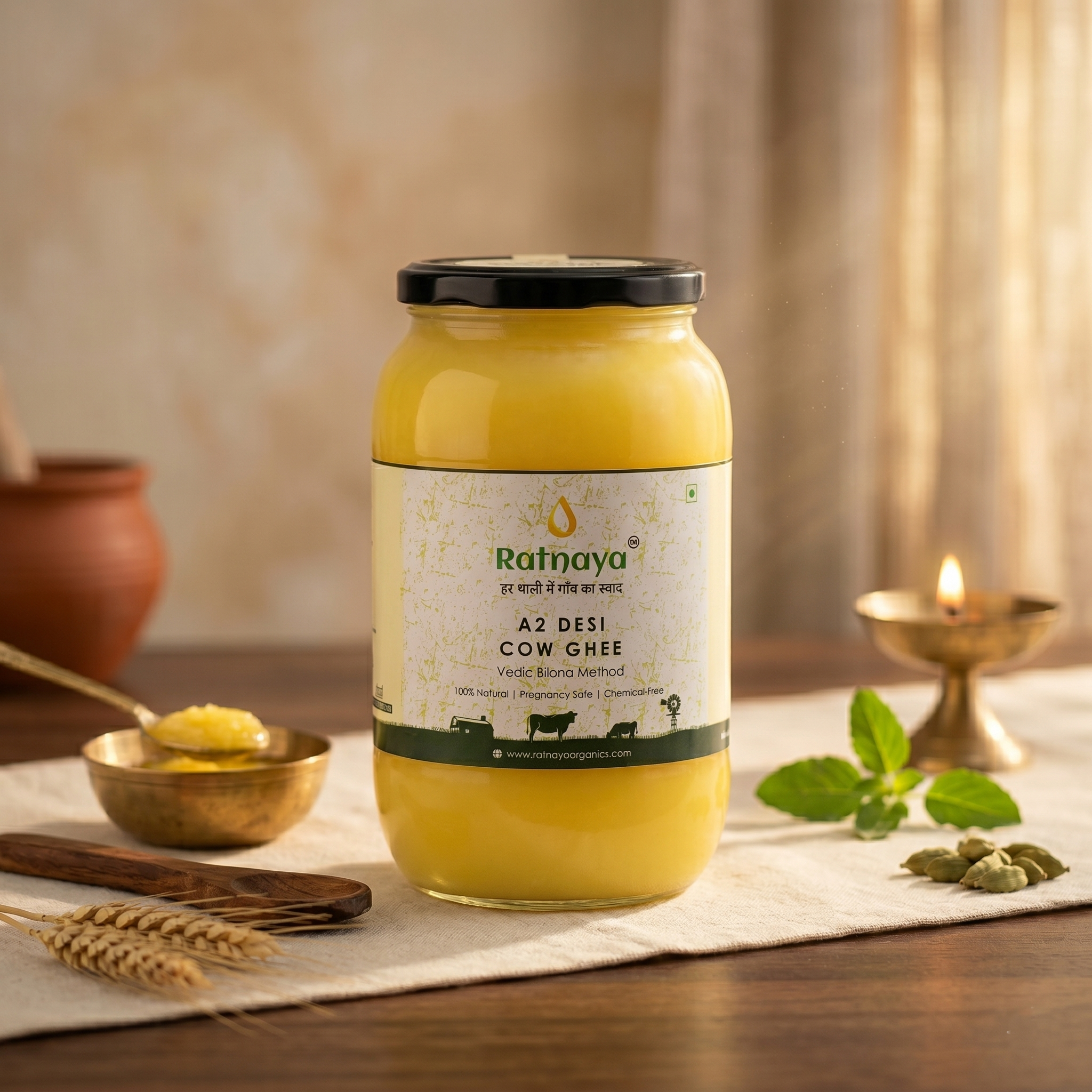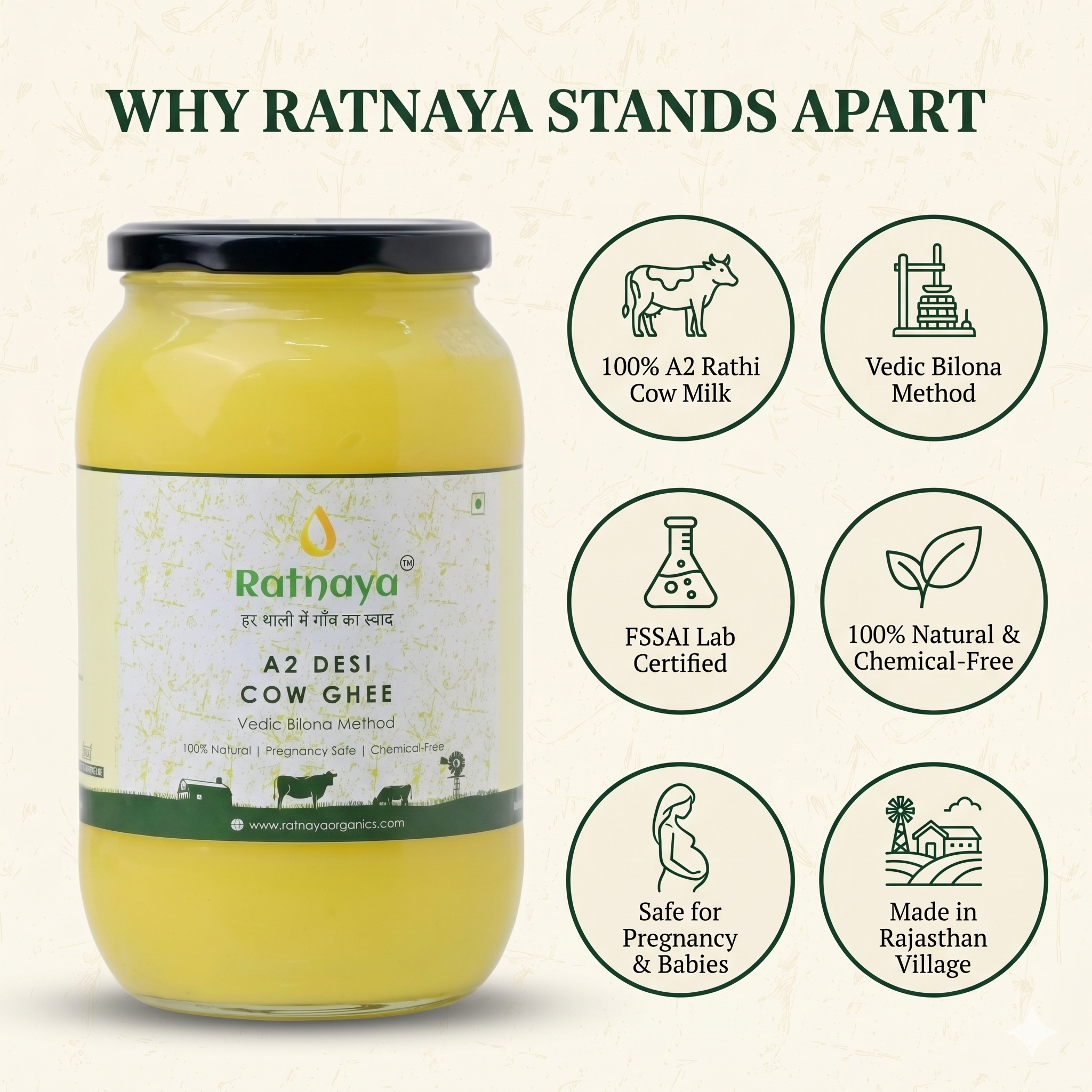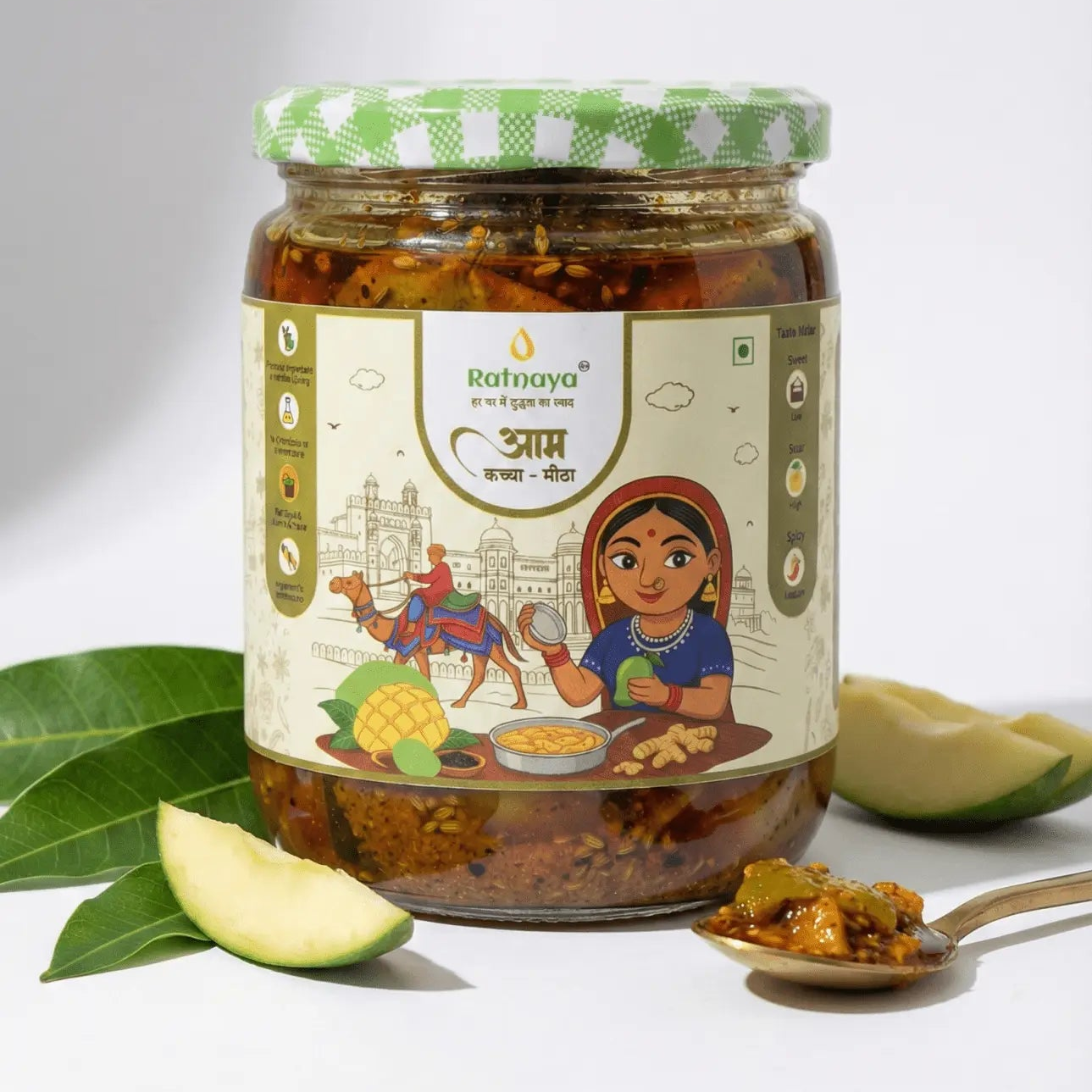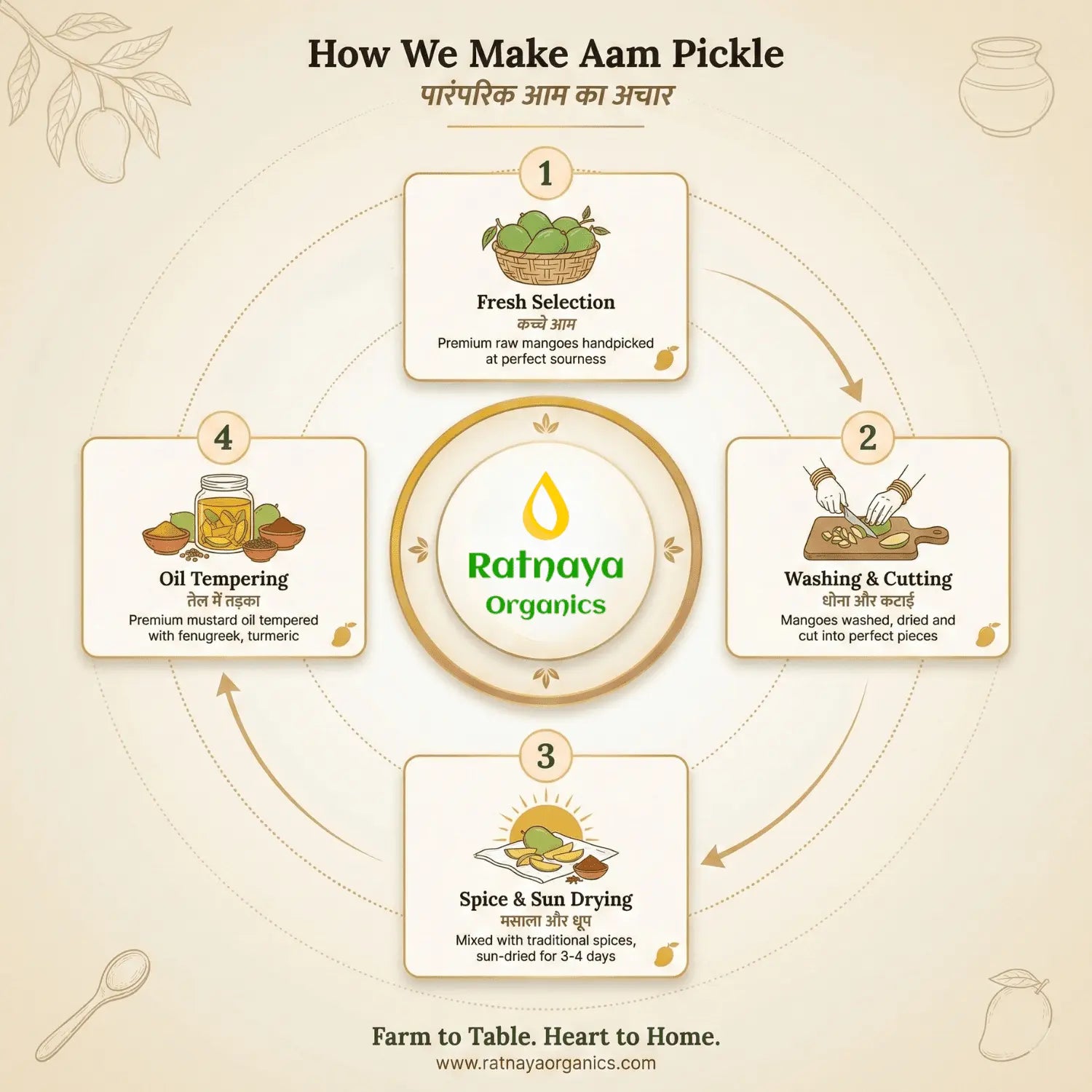

In a world dominated by processed foods, there is a quiet revolution happening in our kitchens—a return to purity. If you’ve been scrolling through Google Discover or reading the latest wellness news, you’ve likely noticed a surging interest in A2 Desi Cow Ghee. But with so many options flooding the market, a common question arises: What is the actual difference between A2 ghee and regular cow ghee?
It’s not just about the price tag; it’s about the DNA of the cow, the method of churning, and the impact on your gut health. At Ratnya Organics, we believe that food is medicine. This guide will walk you through everything you need to know—from identifying pure A2 cow ghee online to understanding why this golden elixir is becoming a staple in modern households.
A2 Ghee vs. Regular Cow Ghee: The Genetic Difference
To understand the product, we must first understand the source. The term "Cow Ghee" is often used loosely, but there is a significant biological difference between A2 ghee and the commercial cow ghee found in most supermarkets.
1. The Casein Connection
-
Regular Cow Ghee (A1): Typically comes from Western breeds like Jersey or Holstein. These cows produce A1 beta-casein protein, which releases BCM-7 during digestion—a peptide often linked to bloating, inflammation, and digestive discomfort.
-
A2 Desi Cow Ghee: Sourced exclusively from indigenous Indian breeds (like Gir, Sahiwal, or Rathi). These cows produce A2 beta-casein, which is structurally similar to the beta-casein found in human breast milk and is more easily absorbed by the body.
If you have ever wondered, "Can lactose-intolerant people eat ghee?", the answer often lies in the type of milk used. A2 ghee is generally tolerated much better by those with dairy sensitivities.
Nutritional Density Comparison
Why choose organic grass-fed cow ghee over the standard variety? The data speaks for itself. A2 ghee is richer in essential nutrients like Omega-3 fatty acids and CLA (Conjugated Linoleic Acid).
[Chart comparing Omega-3, CLA, and Vitamin A levels in A2 vs Regular Ghee]

Nutritional Superiority: A2 Desi Cow Ghee vs. Regular Commercial Ghee
2. The Art of Making: The Traditional Bilona Method
The secret to the best desi cow ghee online isn't just the cow; it's the process. Most commercial "cow ghee" is made by spinning raw milk in industrial centrifuges to separate cream. This is fast, cheap, and strips the ghee of its medicinal properties.
At Ratnya Organics, we follow the ancient Bilona method.
How We Make Ghee (The Vedic Way)
-
Boiling: Fresh A2 milk is boiled in earthen pots.
-
Curdling: The milk is converted into curd (yoghurt) overnight.
-
Churning (Bilona): The curd is hand-churned with a wooden bilona to extract makkhan (butter).
-
Heating: The makkhan is slow-cooked over a low flame to create pure ghee.
[Mind Map illustrating the Bilona Ghee Making Process]

Traditional Bilona Ghee Making Process
This labour-intensive process ensures that our hand-churned ghee retains its grainy texture, nutty aroma, and high nutritional value. This is why Vedic bilona ghee price is higher than industrial ghee—you are paying for purity, not machinery.
3. The Fitness Paradox: Can Eating Fat Make You Thin?
"Is ghee good for weight loss?" This is the #1 question we get. It sounds counterintuitive—eating fat to lose fat. But science supports what our grandmothers knew.
The Metabolic Magic of A2 Ghee
When you consume A2 cow ghee for weight loss, you aren't just eating empty calories. You are consuming Medium Chain Triglycerides (MCTs) found in desi cow ghee.
-
Energy, Not Fat Storage: The liver burns these fats instantly for energy rather than storing them as adipose tissue.
-
Gut Health = Weight Health: Ghee benefits for digestion are linked to butyric acid, which heals the gut lining. A healthy gut absorbs nutrients better, reducing cravings.
-
The Satiety Factor: Adding a teaspoon of bilona ghee to your dal or rice lowers the meal's glycemic index, keeping you fuller for longer.
Pro Tip: Try "Bulletproof Ghee Coffee." Blend 1 tsp of our lab-tested A2 ghee into your morning black coffee. It boosts focus and kills morning hunger pangs.
4. Skincare: Throw Away Your Expensive Creams
The "Slugging" trend took over TikTok last year, using petroleum jelly. But did you know Ayurveda has been "slugging" for 5,000 years with something far purer?
We often think of organic desi ghee as just a kitchen staple, but it is actually a cosmetic powerhouse. Unlike synthetic moisturisers that sit on the surface, pure A2 cow ghee penetrates the deep layers of the dermis.
-
Dark Circles: A drop of shata dhauta ghrita (washed ghee) under the eyes can brighten tired eyes better than chemical serums.
-
Dry Skin: Massaging warm A2 ghee on your face before bed acts as a powerful anti-ageing treatment. The ghee benefits for skin include boosting collagen production and locking in moisture.
-
Lip Care: Forget lip balms; a dab of preservative-free ghee heals cracked lips overnight.
5. Holistic Healing: Inflammation & Immunity
In Ayurveda, ghee is not just food; it is a vehicle (Anupana) that carries medicine to critical parts of the body. Specifically, medicated ghee benefits those suffering from chronic inflammation.
-
Joint Pain Relief: As we age, the natural lubrication in our joints dries up. Consuming ghee for joint pain helps re-lubricate these connective tissues. It is nature's grease for creaky knees!
-
Anti-Inflammatory Action: Ghee's anti-inflammatory properties are potent. Regular consumption of cow ghee can help soothe systemic inflammation.
-
Nasya Treatment: Putting two drops of warm pure cow ghee in your nostrils (Nasya) is an ancient remedy for migraines, stress, and improving eyesight.
6. Cooking with Ghee: Smoke Point & Safety
One of the most practical reasons to switch to ghee for cooking is its high smoke point. Unlike olive oil or butter, which can burn and become carcinogenic at high heat, pure ghee remains stable.
Comparing smoke points of Ghee vs Oils

Smoke Point Analysis: Why Ghee is Safer for Cooking
Whether you are deep-frying or just adding a tadka to your dal, pure A2 desi cow ghee ensures your food stays healthy, even at high temperatures (up to 250°C).
7. Buyer’s Guide: How to Identify & Buy the Best Ghee
When you look to buy organic cow ghee online in India, the options can be overwhelming. Here is a quick checklist to ensure you aren't being duped by adulterated products.
The Purity Checklist
-
The Texture: Pure ghee should be granular (danedar), not waxy.
-
The Aroma: It should have a rich, nutty fragrance, not a bland, oily smell.
-
The Label: Look for terms like "culturable A2 ghee," "curd churned bilona ghee," and chemical-free desi ghee."
Pricing Insight: Why is Ghee Expensive?
A common query we get is about the organic ghee price. To make 1 litre of authentic bilona ghee, we need approximately 25-30 litres of A2 milk. When you factor in the cost of maintaining grass-fed cows, the manual labour of hand-churning, and the use of glass jar A2 ghee packaging to prevent plastic leaching, the cost reflects the quality.
When you check the ghee 1000ml price, remember that you are investing in a product that acts as a supplement, not just an oil.
Holistic Health Benefits: More Than Just Fat
Is ghee good for weight loss? Surprisingly, yes. The presence of short-chain fatty acids (butyrate) in A2 Gir cow ghee helps mobilise stubborn body fat and supports a healthy metabolism.
Top Benefits of A2 Ghee
-
Digestive Health: It lubricates the intestinal walls and reduces inflammation, making ghee beneficial for digestion, a key reason for its popularity.
-
Skin Glow: Rich in antioxidants, using ghee for skin benefits can hydrate and reduce ageing signs naturally.
-
Immunity: It acts as a carrier for nutrients, helping your body absorb vitamins A, D, E, and K.
Map of Health Benefits

Mind Map illustrating the holistic health benefits of A2 Ghee
Buyer’s Guide: How to Identify & Buy the Best Ghee
When you look to buy organic cow ghee online in India, the options can be overwhelming. Here is a quick checklist to ensure you aren't being duped by adulterated products.
The Purity Checklist
-
The Texture: Pure ghee should be granular (danedar), not waxy.
-
The Aroma: It should have a rich, nutty fragrance, not a bland, oily smell.
-
The Label: Look for terms like "culturable A2 ghee," "curd churned bilona ghee," and "preservative-free ghee."
Comparison: A2 Bilona Ghee (Ratnya) vs. Commercial Cow Ghee vs. Vegetable Oil
|
Feature |
A2 Bilona Ghee (Ratnya) |
Commercial Cow Ghee |
Vegetable Oil |
|
Source |
Desi Cows (Gir/Rathi) |
Jersey/Mixed Breeds |
Seeds (Highly Processed) |
|
Method |
Curd-Churned (Bilona) |
Cream-Centrifuged |
Chemical Extraction |
|
Digestion |
Easy (A2 Protein) |
Heavy (A1 Protein) |
Difficult (Inflammatory) |
|
Smoke Point |
High (250°C) |
High (250°C) |
Low to Medium |
|
Price |
Premium |
Economical |
Cheap |
Conclusion
In my experience reviewing health foods, the shift from refined oil to A2 cow ghee is one of the most impactful changes a family can make. I’ve personally noticed that switching to chemical-free desi ghee eliminated the heavy, lethargic feeling often associated with oily meals.
If you are looking to buy A2 desi ghee online, Ratnya Organics offers a transparent, farm-to-table experience. It’s not just a condiment; it’s a lifestyle upgrade.
Ready to experience the difference?
Frequently Asked Questions (FAQs)
Q1: How to identify pure ghee at home?
A: Perform the "Palm Test." Put a spoonful of ghee on your palm. Pure ghee melts instantly due to body heat, whereas adulterated ghee or vegetable fat takes longer to melt and may leave a waxy layer.
Q2: Can lactose-intolerant people eat ghee?
A: Generally, yes. The bilona method removes almost all milk solids (lactose and casein), leaving behind pure healthy fat. However, those with severe allergies should consult a doctor.
Q3: What is the difference between A2 Ghee and Buffalo Ghee?
A: Cow ghee vs buffalo ghee is a common debate. Cow ghee (especially A2) is lighter, golden in colour, and better for metabolism and brain health. Buffalo ghee is white, heavier, and better for gaining muscle mass, but harder to digest.
Q4: Does ghee have side effects?
A: Ghee is beneficial when consumed in moderation. How much ghee per day? 1-2 teaspoons is ideal. Excessive consumption without physical activity may lead to weight gain.
Q5: Why should I choose the A2 Gir cow ghee bilona method over others?
A: The Gir cow is celebrated in Ayurveda for its superior milk quality. The A2 Gir cow ghee produced via the bilona method is considered Sattvic (pure), promoting mental clarity and physical vitality.