The quickest way to tell cow ghee from buffalo ghee: colour. Cow ghee is naturally golden-yellow because cows pass beta-carotene from green fodder into their milk; buffalo ghee is white because buffaloes convert that beta-carotene fully into vitamin A. Beyond colour, the two differ in fat content, digestibility, taste and — most importantly for buyers — in what is actually sold in the market under the name "desi ghee".
Here is the honest comparison, including the one fact most brands will not tell you.
Cow Ghee vs Buffalo Ghee: Quick Comparison
| Factor | Cow Ghee | Buffalo Ghee |
| Colour | Golden-yellow (beta-carotene) | White / off-white |
| Fat & calories | Slightly lower fat, lighter | Higher fat, heavier, more calories |
| Digestion | Lighter — easier for most people | Heavier — can feel greasy |
| Taste & aroma | Nutty, aromatic, granular | Milder, creamier, smoother |
| A2 protein possibility | Yes — if from indigenous (desi) cows | Buffalo milk is naturally A2-type, but lacks the desi-cow micronutrient profile |
| Ayurvedic status | Preferred — considered sattvic and digestive | Used for weight/strength building |
| Shelf life | Long (months) | Long, slightly better solidity in heat |
| Typical price | Higher (less milk fat per litre) | Lower per kg of ghee |
The Market Fact Nobody Tells You
India produces more buffalo milk than cow milk — the country's dairy landscape, documented by the National Dairy Development Board, runs heavily on buffaloes. Buffalo milk yields more fat, which makes buffalo ghee cheaper to produce. The result: a large share of commercial "desi ghee" in the market is buffalo ghee or a cow-buffalo blend, sold with a cow on the label. If a "cow ghee" is pale white and priced like buffalo ghee, believe the colour, not the label. Our ghee purity testing guide shows the simple home checks.
Digestion: Why Cow Ghee Feels Lighter
Buffalo ghee's higher fat content makes it noticeably heavier — traditional wisdom gives it to wrestlers and growing children doing physical work. Cow ghee suits everyday family meals better: lighter on the stomach, and in Ayurveda it holds the higher place — considered sattvic, digestive and suitable for daily use. For how much of it to actually eat in a day, see our daily ghee quantity guide.
The A2 Question — Where It Gets Interesting
Buffalo milk is naturally A2-type, so "A2" alone is not the full story. The reason indigenous cow ghee commands its price is the combination: A2 beta-casein plus the beta-carotene, and the fatty-acid profile of desi breeds like Rathi, Gir and Sahiwal — grazing animals whose milk carries what they eat. A confined, grain-fed buffalo produces fat; a free-grazing desi cow produces the golden ghee Ayurveda wrote about. The full protein science is in our A1 vs A2 ghee guide.
Which One Should You Buy?
- Daily family cooking, kids, older parents: cow ghee — lighter, aromatic, the traditional daily choice.
- Heavy physical work, weight-gain diets, pehalwani tradition: buffalo ghee earns its place.
- Sweets and festive cooking: cow ghee for aroma-led sweets (besan ladoo, halwa); some halwais prefer buffalo ghee for volume frying because it is cheaper — which is exactly why homemade tastes better.
- Baking and neutral flavour: either works; buffalo ghee is milder. For the ghee-vs-dairy-fat decision more broadly, see our ghee vs butter comparison.
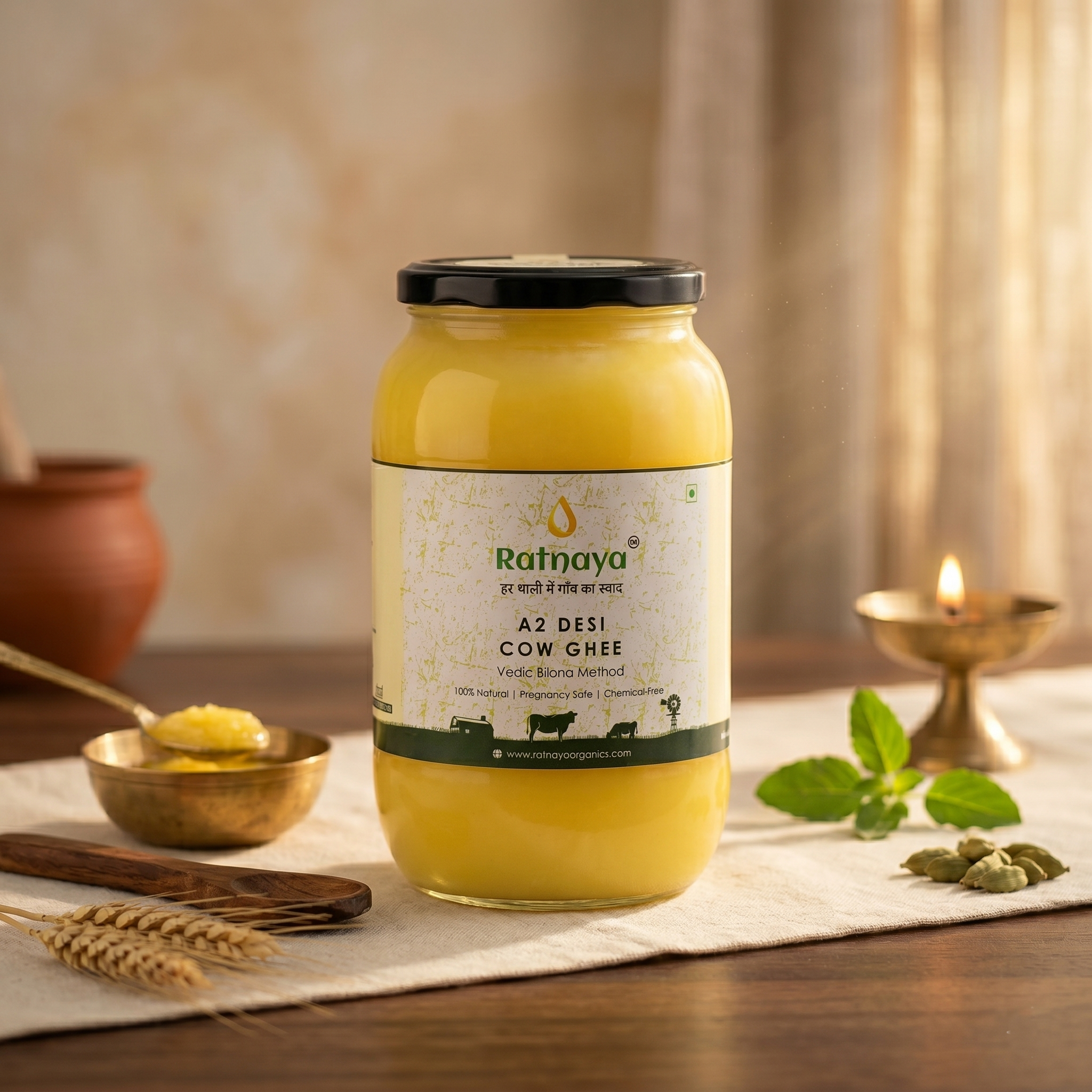
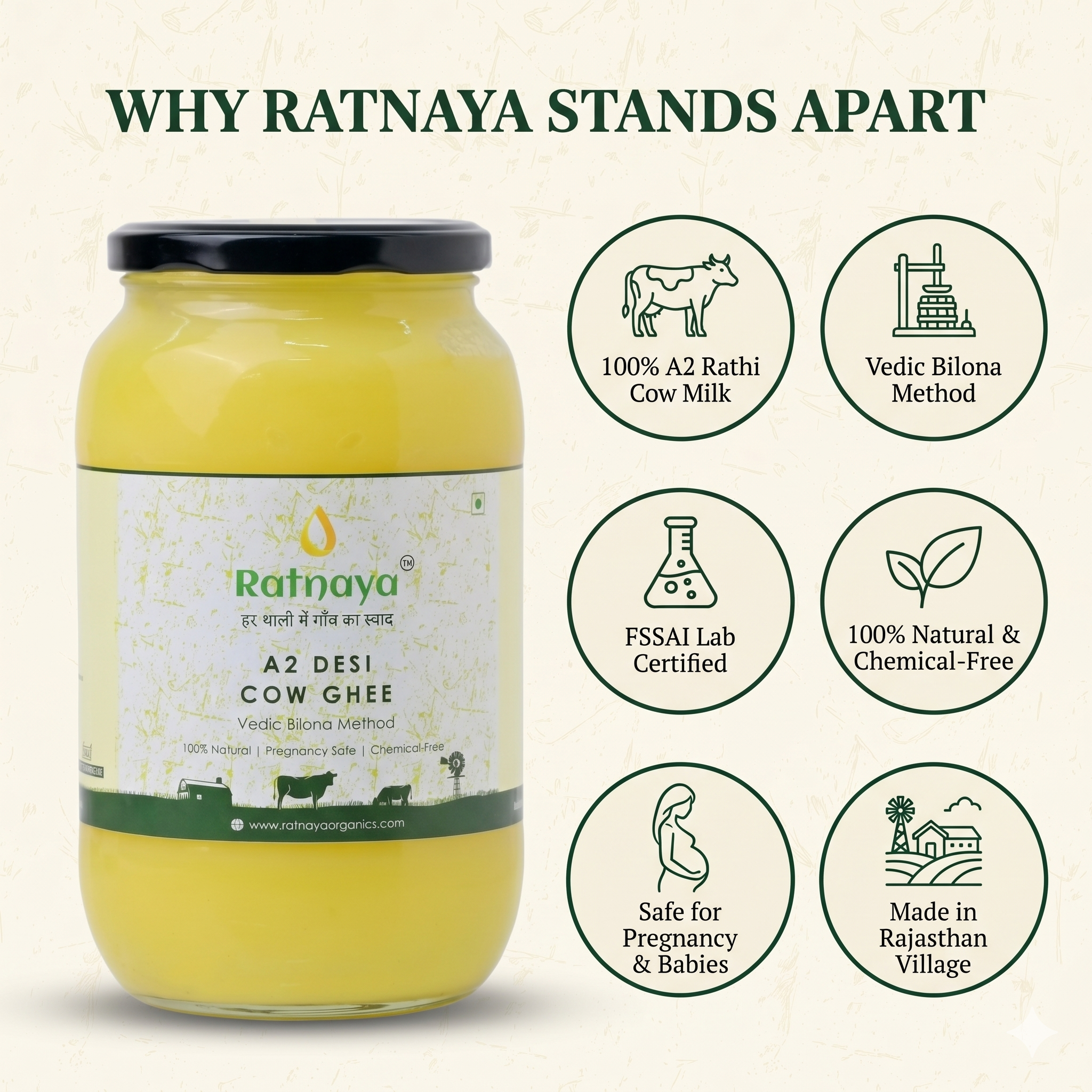
About our ghee: Ratnaya Organics makes only cow ghee — A2 Rathi cow bilona ghee from a 110-acre certified organic farm in Sri Ganganagar, Rajasthan. Rathi is the indigenous milch breed of this region; the milk is curd-fermented, hand-churned and slow-cooked, and every batch is lab-tested. The colour in our 1L jar is the golden that only grazing desi cows produce — no colour is ever added.
Frequently Asked Questions
Which is better, cow ghee or buffalo ghee?
For daily family meals, cow ghee — lighter, more aromatic, and preferred in Ayurveda. Buffalo ghee suits heavy physical work and weight-building diets. Neither is "bad"; they serve different purposes, and purity matters more than the animal.
Why is buffalo ghee white and cow ghee yellow?
Cows pass beta-carotene from green fodder into their milk, giving cow ghee its golden colour. Buffaloes convert beta-carotene entirely into colourless vitamin A, so buffalo ghee is white. Added colour can fake the yellow — price and aroma are better checks than colour alone.
Is buffalo ghee A2?
Buffalo milk is naturally A2-type protein. But the value of indigenous cow ghee is the full package — A2 protein plus beta-carotene and the grazing desi cow's fat profile — which buffalo ghee does not replicate.
Which ghee is better for weight loss?
Cow ghee, if either — it is lighter and slightly lower in fat. But no ghee is a weight-loss food by itself; quantity and overall diet decide the outcome.
How do I know if my "cow ghee" is actually buffalo ghee?
Warning signs: pale white colour, unusually low price, smooth wax-like texture and weak aroma. Genuine desi cow ghee is golden, granular and strongly aromatic. Simple home tests — melt test, fridge test — are covered in our purity guide.