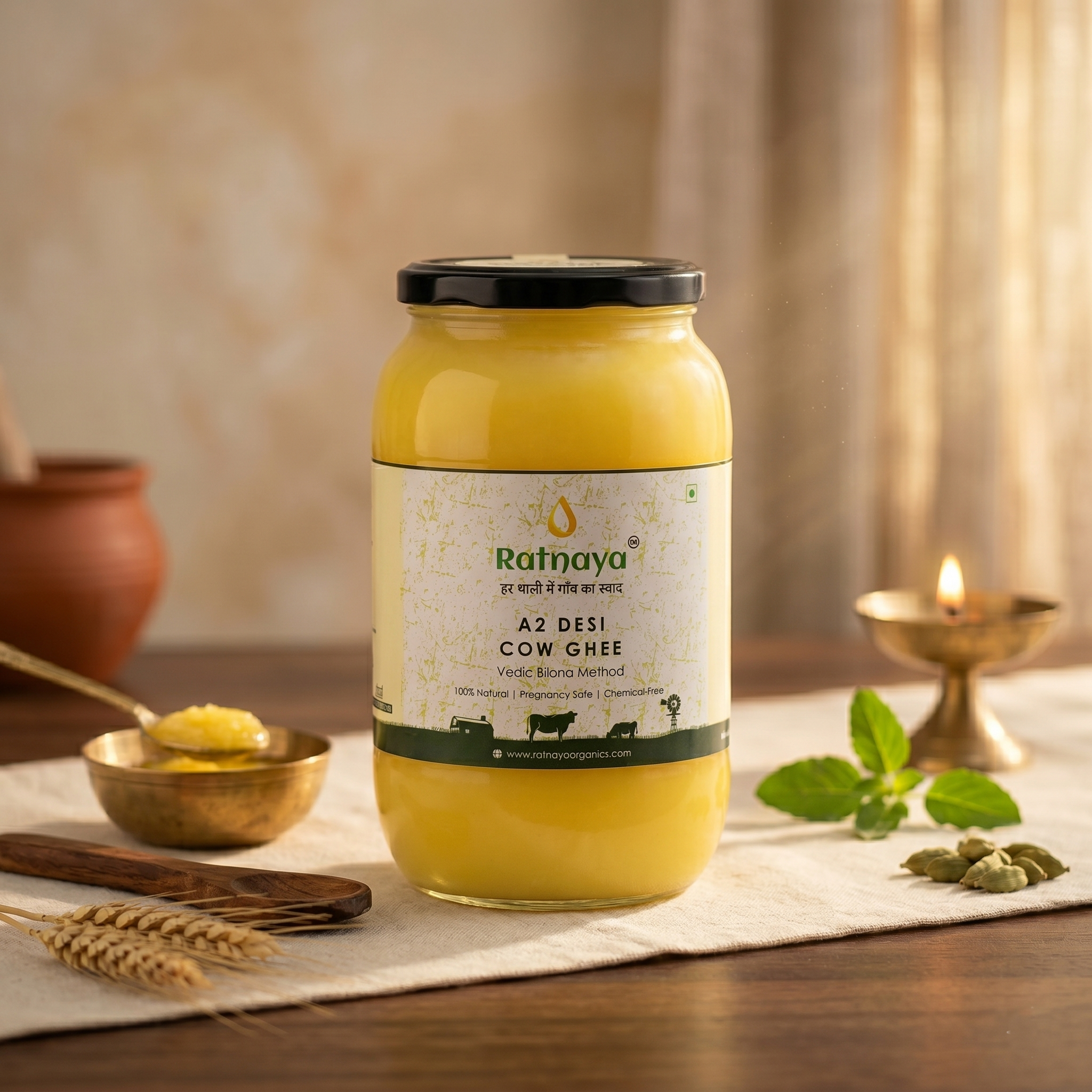

The secret of every great Diwali sweet is the ghee. Besan ladoo, moong dal halwa, pinni — in each of these, ghee is not a background ingredient but the main flavour. Use a pale, machine-made ghee and the mithai tastes flat; use a grainy, aromatic A2 bilona ghee and the same recipe tastes like it came from your grandmother's kitchen.
Here are 7 traditional Diwali sweets, in order of how easy they are to make at home, with the ghee quantity each one needs — so you can plan how much ghee to keep ready before the festive week begins.
How Much Ghee Will You Need This Diwali?
| Sweet | Ghee needed (approx.) | Difficulty | Time |
| Besan Ladoo | ¾ cup for 15 ladoos | Easy | 40 min |
| Sooji (Rava) Ladoo | ½ cup for 15 ladoos | Easy | 30 min |
| Atta Pinni | ¾ cup for 12 pinnis | Easy | 45 min |
| Shakkarpara | ¼ cup in dough + for frying | Easy | 45 min |
| Coconut Ladoo | 2 tbsp for 12 ladoos | Very easy | 20 min |
| Moong Dal Halwa | 1 cup for 6 servings | Hard — worth it | 75 min |
| Gajar Ka Halwa | ½ cup for 6 servings | Medium | 60 min |
Cooking most of these in one festive week? A family typically uses 1.5–2 litres of ghee across Diwali sweets and festive meals — which is why many of our customers switch to the 5 litre pack before the season starts.
1. Besan Ladoo — The King of Diwali Sweets
You need: 2 cups besan, ¾ cup A2 ghee, 1 cup powdered sugar (boora), cardamom powder, chopped almonds.
Method: Roast besan in ghee on low flame for 20–25 minutes, stirring continuously, until it turns golden and releases a nutty aroma — this slow roasting is the whole recipe. Cool it until just warm, mix in the boora and cardamom, and roll into ladoos. If the mixture feels dry, add a spoon of warm ghee.
The ghee test: besan ladoo made with bilona ghee sets with a slight grain and melts in the mouth. If your ladoos taste raw, the besan needed 5 more minutes of roasting.
2. Sooji (Rava) Ladoo — The Quick One
You need: 2 cups fine sooji, ½ cup ghee, 1 cup powdered sugar, 2 tbsp milk, raisins and cashews.
Method: Roast sooji in ghee until aromatic (8–10 minutes — do not brown it). Fry the dry fruits in a spoon of ghee. Mix everything with sugar, sprinkle milk to bind, and shape while warm.
3. Atta Pinni — Punjab and Rajasthan's Winter Gift
You need: 2 cups whole wheat atta, ¾ cup ghee, 1 cup boora, crushed almonds, gond (edible gum, optional).
Method: Roast atta in ghee on low heat for 20 minutes until deep golden. Fry gond separately in ghee until it puffs. Mix, cool slightly, add boora, and press into round pinnis. These keep for a month — perfect for making before the festive rush.
4. Shakkarpara — The Crunchy Snack Box Filler
You need: 2 cups maida or atta, ¼ cup ghee (moyan), ½ cup sugar dissolved in ¼ cup water, ghee or oil for frying.
Method: Rub the ghee into the flour (this moyan is what makes them crisp), knead with the sugar water, roll thick, cut into diamonds, and fry on low-medium until golden. Frying in ghee instead of oil is what separates homemade shakkarpara from bakery ones.
5. Coconut Ladoo — The 20-Minute Sweet
You need: 2 cups desiccated coconut, 1 cup condensed milk (or khoya), 2 tbsp ghee, cardamom.
Method: Warm the ghee, add coconut and roast 2–3 minutes, add condensed milk and cardamom, cook until the mixture leaves the pan, cool and roll into ladoos, then coat in dry coconut. When guests arrive unannounced during Diwali week, this is the recipe you want.
6. Moong Dal Halwa — The Labour of Love
You need: 1 cup moong dal (soaked 4 hours, ground coarse), 1 cup ghee, 1 cup sugar, 2 cups milk/water, saffron, cardamom.
Method: Roast the ground dal in ghee on low flame for 35–40 minutes, stirring non-stop, until it turns golden and the ghee starts separating. Add hot milk carefully, cook until absorbed, then add sugar and saffron and cook until glossy. Your arm will ache — and it will be the first sweet to finish on Diwali night. This is the recipe where ghee quality matters most, because ghee is a third of the dish.
7. Gajar Ka Halwa — The Season Opener
You need: 1 kg red carrots (grated), ½ cup ghee, ¾ cup sugar, 2 cups full-fat milk, khoya (optional), cardamom.
Method: Cook grated carrots in milk until it evaporates, add ghee and roast 10–15 minutes, then sugar, then khoya. Red winter carrots start arriving around Diwali — the first gajar halwa of the season is a festival in itself.
Why A2 Bilona Ghee Makes Better Mithai
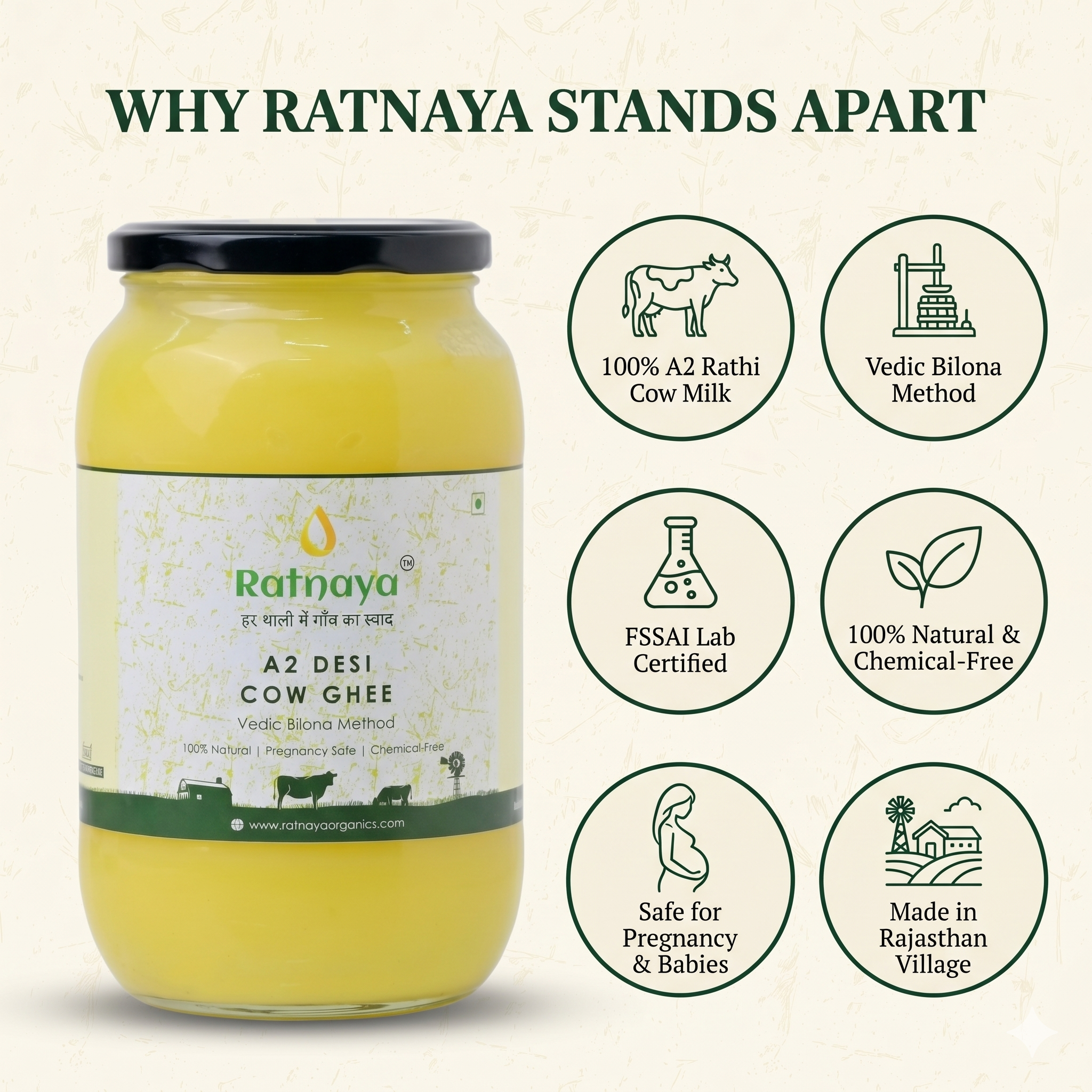
Three practical reasons, beyond taste: bilona ghee's grainy texture carries aroma into roasted flours (besan, atta, sooji) better than smooth industrial ghee; it has a high smoke point, so long slow roasting doesn't burn it; and it contains no added oils or vanaspati — a real risk with cheap "festive offer" ghee sold before Diwali. Every batch of Ratnaya ghee is lab-tested; if you want to check any ghee yourself before cooking with it, use our ghee purity testing guide.
About the ghee in these recipes: Ratnaya Organics makes A2 Rathi cow bilona ghee on a 110-acre certified organic farm in Sri Ganganagar, Rajasthan — curd-fermented, hand-churned, slow-cooked. Gifting sweets this year? See our Diwali ghee gift hampers guide.
Frequently Asked Questions
Which ghee is best for making Diwali sweets?
A pure cow ghee with a grainy texture and strong natural aroma — traditional bilona-churned A2 ghee is ideal because slow-roasted sweets like besan ladoo and moong dal halwa absorb the ghee's flavour directly. Avoid any ghee priced suspiciously low before the festive season; adulteration peaks during Diwali demand.
How much ghee do I need for Diwali cooking?
For a family making 3–4 sweets plus festive meals, plan for 1.5–2 litres across the festive week. Besan ladoo and moong dal halwa are the most ghee-hungry recipes at around ¾ to 1 cup each.
Can I make these sweets ahead of Diwali?
Yes — pinni and shakkarpara keep for 3–4 weeks in airtight containers, besan and sooji ladoos for 2 weeks, coconut ladoos for a week refrigerated. Make halwas fresh, or refrigerate 3–4 days and reheat with a spoon of ghee.
Why did my besan ladoo taste raw or bitter?
Raw taste means the besan was under-roasted — it needs 20–25 minutes on low flame until golden and nutty. Bitter usually means the flame was too high and the besan scorched. Low flame, continuous stirring, and patience solve both.
Is ghee-fried shakkarpara healthier than oil-fried?
Ghee is more stable at frying temperatures than most refined oils, which degrade and form harmful compounds on reheating. For festive frying done occasionally, pure ghee is the traditional and more stable choice — and the taste is incomparable.