For a healthy adult, 1–2 teaspoons of ghee per meal — roughly 2 to 3 teaspoons (10–15 g) a day — is the sensible, traditional amount. That fits comfortably within the total daily "visible fat" limit of about 25–30 g that the ICMR–National Institute of Nutrition recommends for Indians, which includes all your cooking oil, butter and ghee combined.
Ghee is a fat — a good one when pure, but still a fat. The right question is not "is ghee healthy?" but "how much, for whom, and in place of what?" Here is the practical answer.
The Daily Ghee Guide (General, Not Medical Advice)
| Who | Sensible daily amount | Note |
| Sedentary adult (desk job) | 2 tsp (≈10 g) | Best used in cooking/tadka, not extra on top |
| Active adult / physical work | 2–3 tsp (10–15 g) | Farmers and gym-goers burn it easily |
| Children (2+ years) | 1–2 tsp | In dal, roti, khichdi — spread across meals |
| Older adults | 1–2 tsp | Easy to digest; adjust with activity level |
| Heart/cholesterol/weight conditions | Ask your doctor | Ghee is saturated fat — your doctor knows your numbers |
One teaspoon of ghee is roughly 5 g and about 45 calories. So 3 teaspoons a day is ~135 calories — less than one packet of biscuits, with far better company.
The Rule That Matters More Than the Quantity
Ghee should replace other fats, not sit on top of them. If your sabzi is already swimming in refined oil and you add ghee on your roti as well, you have doubled your fat, not improved it. The traditional Indian pattern — and the healthier one — is: cook the tadka in ghee instead of refined oil, and skip the second fat. On why ghee is the more stable cooking fat of the two, see our ghee vs butter comparison.
Best Ways to Take Your Daily Ghee
- In the tadka — dal, sabzi, khichdi. The most natural route; heat releases the aroma fully.
- On fresh roti — half a teaspoon on a hot phulka is the classic Indian serving.
- Morning, empty stomach — a small Ayurvedic tradition (1 tsp warm ghee, warm water after). If you follow it, count it inside your daily total, not on top of it.
- In sweets and festive food — occasional, and worth it. See how much different mithais need in our Diwali sweets guide.
When You Should Eat Less (Honest Section)
Ghee is roughly 60% saturated fat. Bodies differ. If you have diagnosed heart disease, high LDL cholesterol, obesity, or your doctor has put you on a fat-restricted diet — follow the doctor, not a blog. The FSSAI and ICMR-NIN both frame ghee within total fat limits, not as an unlimited health food. Pure ghee in sensible quantity is food; any fat in excess is a problem — including ours.
Quality Changes the Equation
These quantities assume pure ghee. A "ghee" cut with vanaspati or refined palm oil brings trans fats into the picture — worse than eating no ghee at all. This is not a small risk: adulteration is common in loose and suspiciously cheap ghee. Learn the simple checks in our ghee purity testing guide, and if you want the science of why A2 milk matters, our A1 vs A2 guide covers it. For a general overview of ghee's nutrition profile, Healthline's ghee explainer is a good independent read.
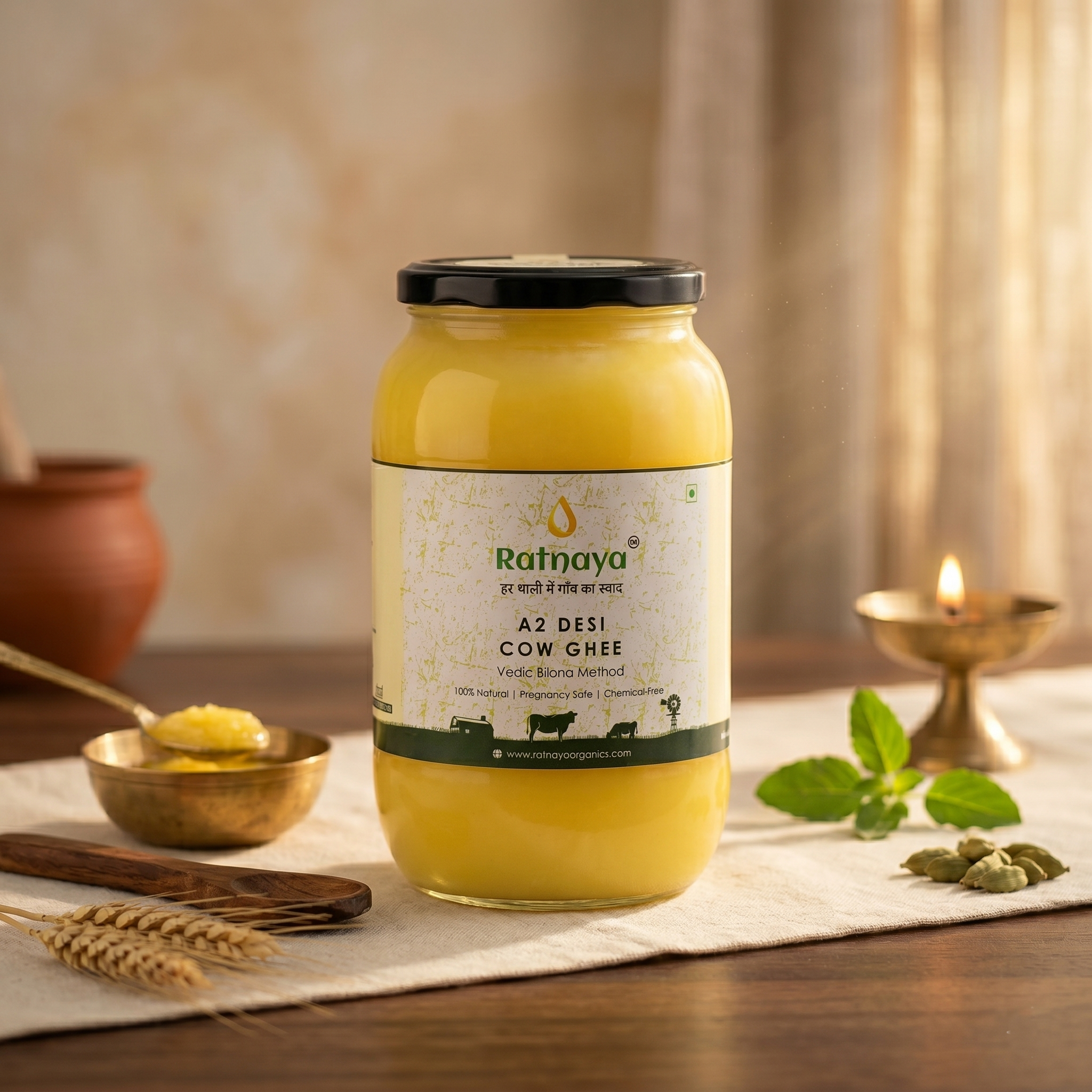
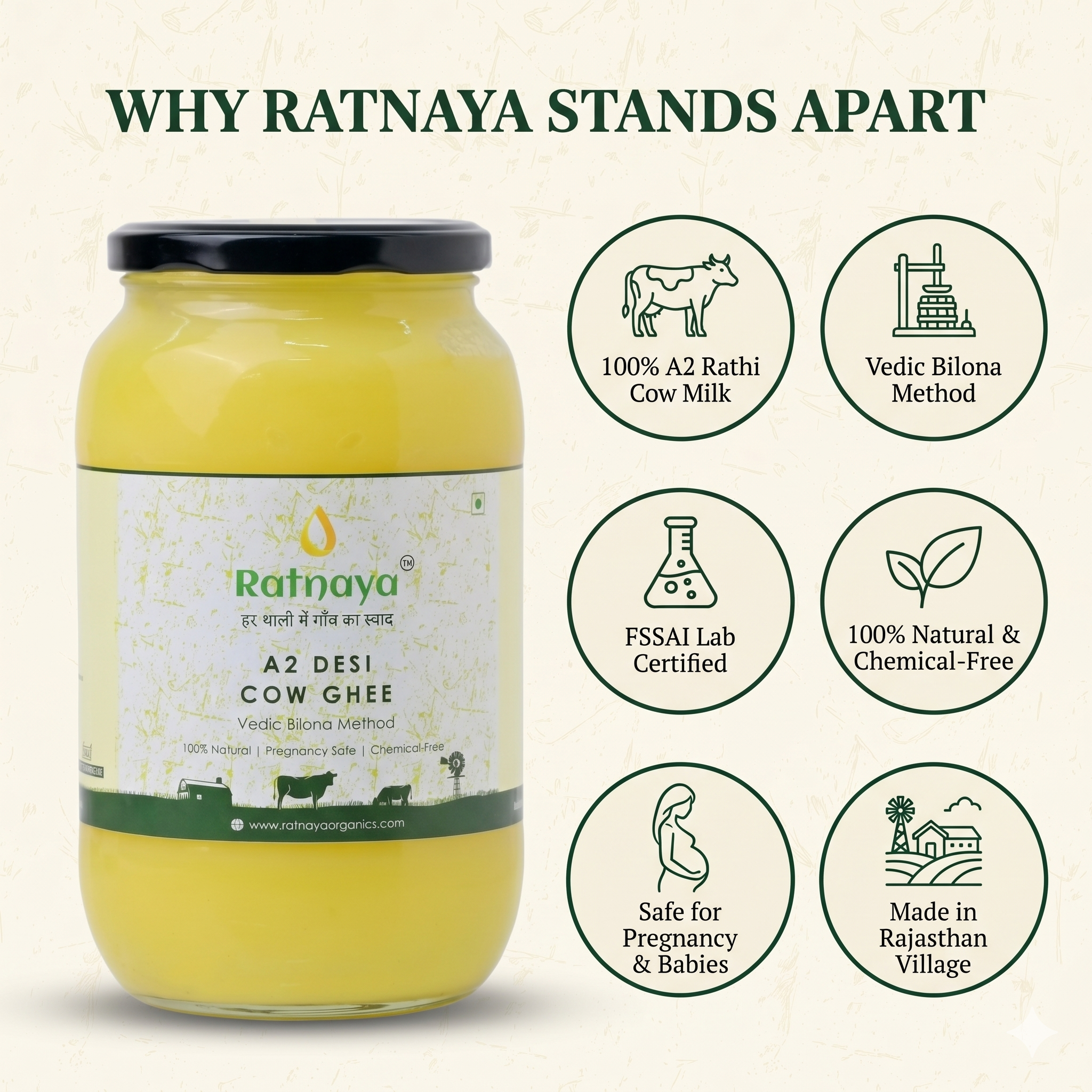
About our ghee: Ratnaya Organics makes A2 Rathi cow bilona ghee on a 110-acre certified organic farm in Sri Ganganagar, Rajasthan — curd-fermented, hand-churned, wood-fire cooked, lab-tested every batch. A 500ml jar at 2–3 teaspoons a day lasts one person about a month — which tells you the honest per-day cost of good ghee: about ₹30.
Frequently Asked Questions
Can I eat ghee every day?
Yes — for most healthy people, 2–3 teaspoons daily as part of normal cooking is the traditional pattern, provided it replaces other fats rather than adding to them, and your total visible fat stays around the ICMR-NIN guideline of 25–30 g/day.
Does ghee increase cholesterol?
Ghee is about 60% saturated fat, and response varies from person to person. In sensible amounts within total fat limits, most healthy people handle it well; if you have high LDL or heart disease, ask your doctor before making ghee a daily habit — that is the honest answer.
Is eating ghee on an empty stomach good?
It is a long-standing Ayurvedic practice — 1 teaspoon of warm ghee in the morning. Modern evidence is limited; if you enjoy it and digest it well, keep it, but count it within your daily 2–3 teaspoons, not extra.
How much ghee is too much?
Regularly crossing 3–4 tablespoons (45–60 g) a day pushes most people past sensible fat limits. Warning signs are the ordinary ones — weight gain and rising cholesterol on your next test.
Should I give ghee to my child daily?
After age two, 1–2 teaspoons a day mixed into dal, khichdi or roti is a common and traditional practice. For infants under two, introduce fats on your paediatrician's advice.