Ghee can be introduced to a baby's diet once solids begin — around 6 months of age — starting with just a few drops mixed into khichdi or dal, and slowly increasing to about half a teaspoon a day by the first birthday. This is the common traditional practice across Indian homes, and it fits what child-nutrition guidance says about weaning foods needing energy density. One rule sits above everything in this article: your paediatrician's advice comes first — especially for premature babies or any medical condition.
Here is the practical, honest guide — how much, how to give it, what to watch for, and which ghee is safe for a baby.
Ghee for Babies: Age-Wise Guide (General Practice, Not Medical Advice)
| Age | Typical amount | How to give |
| 0–6 months | None | Only breast milk / formula, as per doctor |
| 6–8 months | Few drops → ¼ tsp/day | Mixed into mashed khichdi, dal ka pani |
| 8–12 months | ¼ → ½ tsp/day | In khichdi, mashed sabzi, sooji porridge |
| 1–2 years | ½ → 1 tsp/day | On roti, in dal, rice, halwa |
| 2+ years | 1–2 tsp/day | Normal family food — see our daily ghee guide |
Why Indian Homes Add Ghee to Baby Food
There is real logic behind the tradition. A baby's stomach is tiny, but their energy need per kilo of body weight is the highest it will ever be. The WHO's complementary feeding guidance emphasises that weaning foods must be energy-dense — watery dal and plain khichdi fill the stomach without filling the need. A quarter teaspoon of ghee roughly doubles the calories of a small katori of khichdi without adding volume. Fat is also essential in infancy — a large share of early brain development runs on dietary fats. Ghee is simply the traditional Indian way of adding that fat to home food.
How to Introduce It (The 3-Day Rule)
- Start with 2–3 drops in one meal, and — as with every new food — wait 3 days before increasing, watching for any reaction (rash, loose motions, vomiting).
- Mix into warm food, don't give it plain — khichdi, dal ka pani, mashed sweet potato all work.
- One new thing at a time — don't introduce ghee the same week as another new food, or you won't know what caused a reaction.
- Milk-allergy caution: ghee has only trace milk proteins, but if your baby has a diagnosed cow-milk protein allergy or strong family history, ask your paediatrician before starting — this is the one case where the traditional advice must wait for the doctor.
Which Ghee Is Safe for a Baby? (This Part Matters Most)
Whatever quantity you choose, the quality question is bigger for a baby than for anyone else in the house. Three non-negotiables:
- Zero adulteration. Vanaspati or refined-oil-blended "ghee" means trans fats — the worst fat for a developing body. Cheap loose ghee is the riskiest. Run the checks in our purity testing guide on any ghee entering a baby's diet.
- Cow ghee over buffalo ghee for babies — lighter and easier to digest (our cow vs buffalo ghee guide explains the difference).
- A2, if you can. Many parents specifically choose A2 ghee from indigenous cows for easier digestion — the science is in our A1 vs A2 guide.
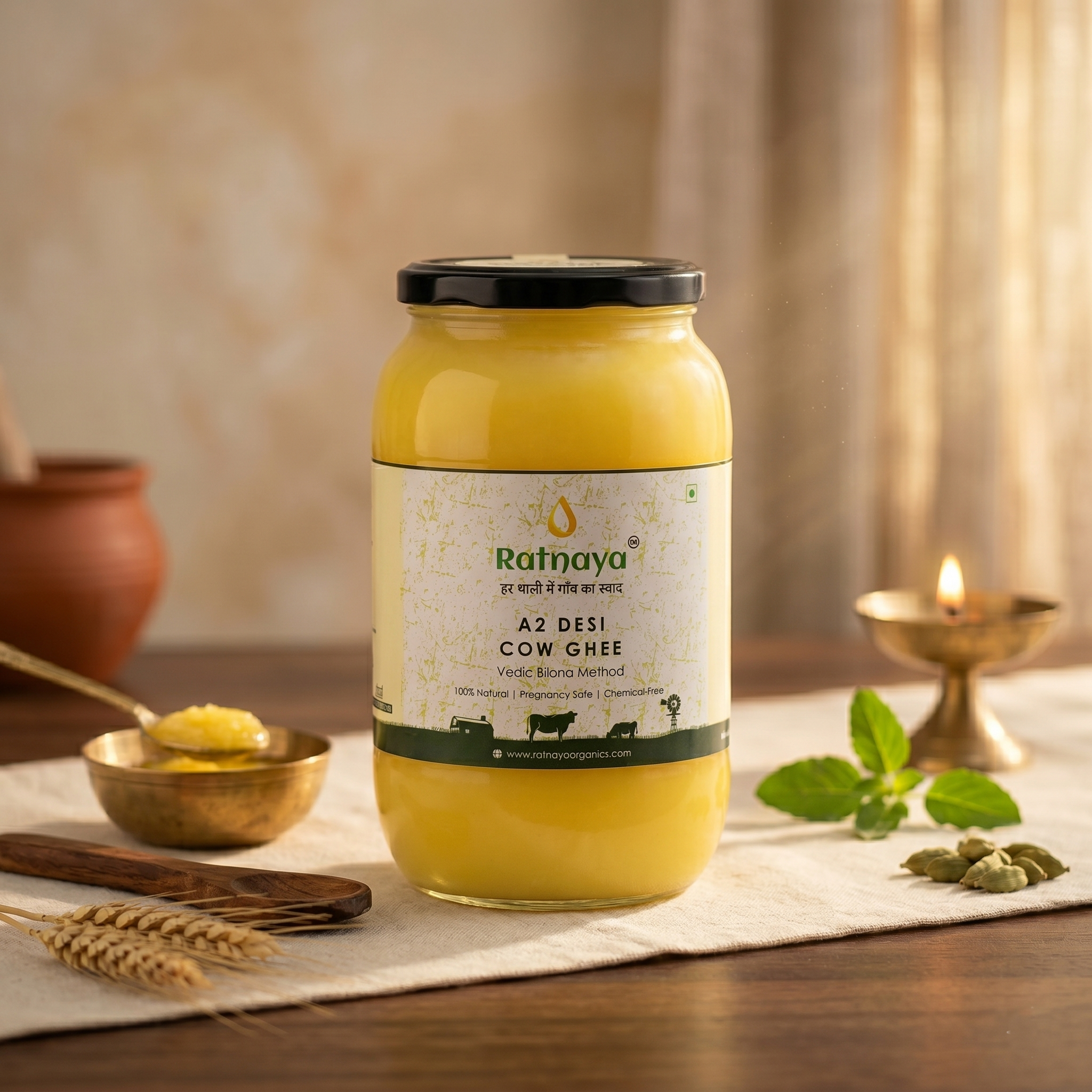
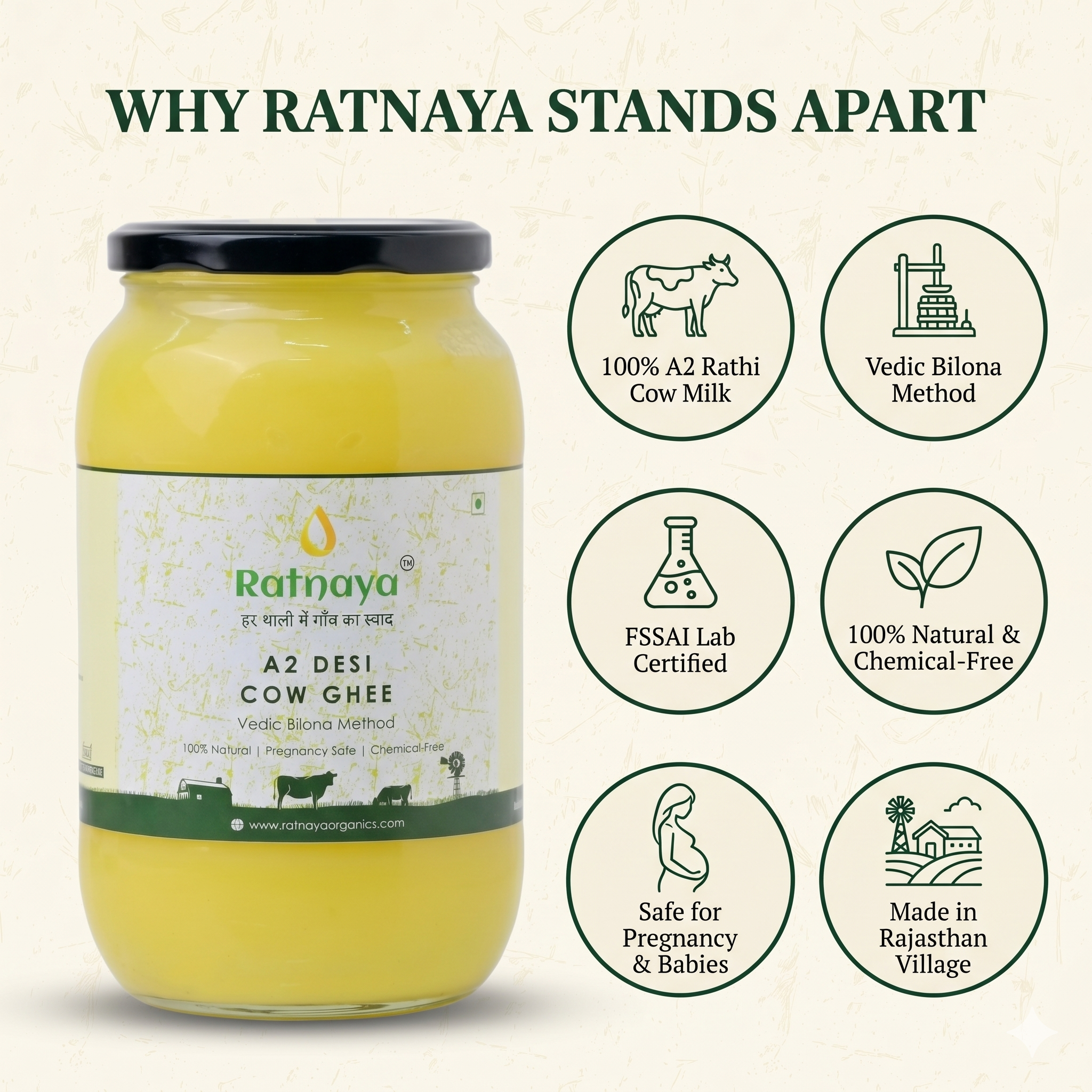
About our ghee: Ratnaya Organics makes A2 Rathi cow bilona ghee on a 110-acre certified organic farm in Sri Ganganagar, Rajasthan — curd-fermented, hand-churned, lab-tested every batch, with no colour, essence or blending ever. For a baby just starting, the 250ml jar stays fresh for exactly this kind of teaspoon-a-day use.
Frequently Asked Questions
Can I give ghee to my baby every day?
Yes — once introduced without any reaction, a small daily amount (per the age table above) mixed into meals is the common traditional practice. Keep it inside the meal, not as a supplement on top of every dish.
Does ghee help babies gain weight?
Ghee adds calorie density to small meals, which supports healthy weight gain in babies who eat little volume. It is not a fix for genuine growth concerns — if your baby's weight curve worries you, that conversation belongs with your paediatrician, not a ghee jar.
Can ghee cause allergy in babies?
True ghee allergy is uncommon because clarification removes almost all milk proteins — but trace amounts remain. For babies with diagnosed cow-milk protein allergy, ask your doctor first. For everyone else, the 3-day watch rule catches sensitivities early.
Is ghee massage good for babies?
Oil/ghee massage is a widespread Indian tradition and most babies enjoy it. Evidence on any special benefit of ghee over standard baby oils is limited — it's a comfort-and-bonding practice more than a medical one. Patch-test on a small area first.
Ghee or butter — which is better for babies?
Ghee — it has almost no lactose/casein, and doesn't need refrigeration or spread on bread a baby can't eat anyway. Mixed into warm khichdi, it disappears into the food. The full comparison is in our ghee vs butter guide.